


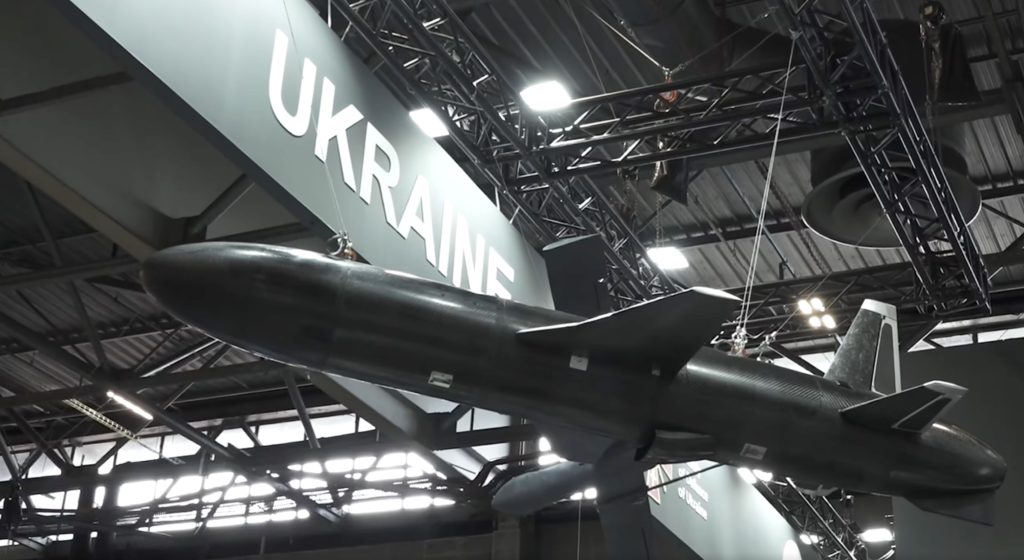
The long-range bombardment shows how far Ukraine has come in developing its domestic weapons industry.
Ukraine launched a significant attack against the Russian capital on 18 June, targeting energy infrastructure around Moscow with long-range drones.
Dozens of one-way attack munitions breached Russia’s air defences in the early hours, with strikes continuing into the day. The primary target of the attack was the Moscow petroleum refinery operated by state oil company Gazprom.
Kyiv confirms the operation, with Ukrainian President Volodymyr Zelensky calling the strikes a “fully justified response to Russian attacks on our cities and communities”.
“Our long-range sanctions once again reached the Moscow region – for the second time this week, the Moscow oil refinery was hit,” Zelensky said on 18 June. “Targets were also struck in the Rostov region and in temporarily occupied territories of Ukraine.”
Last night, our long-range sanctions once again reached the Moscow region – for the second time this week, the Moscow oil refinery was hit. Targets were also struck in the Rostov region and in temporarily occupied territories of Ukraine. This is a fully justified response to… pic.twitter.com/NhFl4FlT9L
— Volodymyr Zelenskyy / Володимир Зеленський (@ZelenskyyUa) June 18, 2026
The Russian defence ministry says it tracked over 1,000 incoming attack drones and several cruise missiles. Video footage from Moscow captured ground-based missiles intercepting some of the threats, while others impacted refinery equipment with spectacular results.
One drone directly struck a large storage tank, with a subsequent explosion blowing the tank’s massive circular cap into the air. In addition to fires raging throughout the refinery complex, footage circulating on social media shows several nearby residential buildings engulfed in flames.
It is unclear if that is the result of a targeting error or from debris impacts after incoming drones were intercepted by air defences.
Authorities in Moscow dispatched at least half a dozen firefighting helicopters to douse the blaze.
Russian civilians speaking to the BBC have reported a “fine, light drizzle” of oil falling from the sky in the wake of the refinery attack. Similar conditions were reported in Tehran after the US and Israel struck oil facilities there during their March air campaign.
Moscow’s four commercial airports were temporarily shuttered by the incursion, with more than 500 flights cancelled or delayed, according to the BBC.
The attack on Moscow is particularly notable because it was achieved using Ukrainian-made weapon systems, rather than those donated by the Western allies, who have long restricted Kyiv from using those missiles to strike deep into Russian territory.
The success of the mission indicates just how far Ukraine’s domestic defence industry has advanced since the war began, in terms of both unmanned systems and long-range strike.
Footage of the air raid indicates that numerous FP-1 kamikaze drones were used in the attack. These are produced indigenously by Ukrainian defence company Fire Point and have a base range of 890nm (1,650km).
An optional wing-mounted fuel tank can give the FP-1 an extended range of over 1,450nm, according to Fire Point, which has its wares on display at the Eurosatory trade show running this week in Paris.
Just hours after the Moscow attack was launched, Fire Point was showing video of the strikes at the company’s Eurosatory stand.

Other munitions documented in the attack include a delta-wing, Shahed-style drone presumed to be the Behemoth one-way system, which was unveiled by Ukrainian firms Culver Aerospace and GLEFA in May, and the An-196 one-way attack system — a product of aircraft manufacturer Antonov and Ukrainian weapons producer Ukroboronprom.
At the time of the attack, Zelensky was in Western Europe, meeting with allied leaders attending the G7 Summit and NATO Secretary General Mark Rutte.
Topics discussed included the delivery of second-hand Lockheed Martin F-16 fighter jets from Belgium. After meeting with Belgian Prime Minister Bart De Wever, Zelensky revealed these will soon be turned over to Ukraine.
“The first aircraft will arrive this year,” he notes.
The Ukrainian air force already operates around 20 legacy A- and B-model F-16s provided by the Netherlands and Denmark. Upwards of 100 used F-16s have been pledged to Ukraine by NATO countries, including Norway (six), Belgium (30), the Netherlands (42) and Denmark (19).
The USA has sent an unspecified number of decommissioned F-16s to Ukraine as a source of spare parts, while France has transferred a batch of flightworthy Dassault Mirage 2000 fighters.
While Ukraine’s air force is gaining strength, the country remains reliant on Western backers for sophisticated air defence interceptors like the Lockheed Martin PAC-3 fired by the Raytheon Patriot battery. These, Zelensky says, remain a top strategic focus for Kyiv.
“The key priority is working on strengthening our defence and obtaining licences from the United States for the production of air defence equipment,” the Ukrainian leader says.
In recent weeks, Ukraine has been engaged in a separate campaign targeting Russian logistics and fuel infrastructure in Crimea and other regions of occupied eastern Ukraine with drone strikes.
The effort appears to be intended to isolate the strategic Black Sea peninsula from mainland Russia. Establishing a land bridge to Crimea was one of Moscow’s strategic war aims.
The destruction of bridges, railways and other transportation infrastructure around Crimea has created fuel shortages on the peninsula.
The post Ukraine hits Moscow with heavy drone strikes, igniting oil refinery first appeared on FlightGlobal.