
The service held a sundown ceremony with the last C-2A carrier resupply turboprop, ending more than 60 years of service.
The US Navy has ended flight operations with its Northrop Grumman C-2A Greyhound turboprops, concluding more than 60 years of service in the COD (carrier onboard delivery) role.
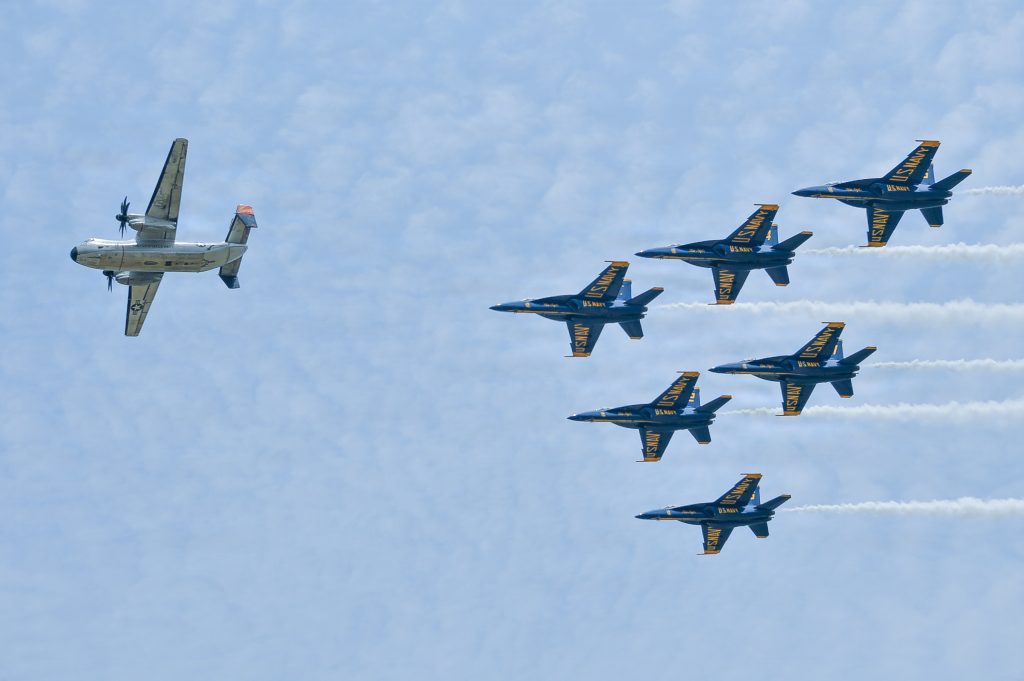
The last active C-2A landed at NAS Pensacola in Florida on 28 July for a sundown ceremony. That Greyhound, registration number 162159, took off from Norfolk, Virginia, and was escorted in a final flyover by a flight of blue-and-yellow Boeing F/A-18 Super Hornet fighters from the navy’s Blue Angels demonstration team.
The same C-2A had logged the type’s final carrier landing and launch in June, operating from USS Nimitz in the Atlantic Ocean waters off the US East Coast.
The final C-2A will remain in Pensacola permanently, having been donated to the National Naval Aviation Museum, where it will be rehabilitated and turned into an exhibit to be displayed starting in 2027.

With the end of Greyhound operations, the US Navy will now rely full-time on the Bell-Boeing CMV-22 Osprey tiltrotor to resupply its carriers at sea. That transition had been planned for 2024 but was delayed after a fatal Osprey crash in late 2023 killed eight US Air Force personnel off the coast of Japan and grounded the entire US fleet of V-22s.
The navy had to scramble to maintain carrier-onboard delivery support, having shuttered all but one remaining squadron of C-2As.
That unit, Fleet Logistics Squadron 40 (VRC-40), picked up Greyhound operations worldwide, including piloting the sunset sortie into Pensacola.
“It’s very sad to me, but I feel satisfaction that we did it safely. We did it right in coming to a close like this,” says Commander Paul Ingram, the squadron’s commanding officer.
With the handover of its last aircraft, the navy now plans to shutter VRC-40.

Along with the end of Greyhound flights, the transition to the Osprey marks another milestone in navy history, notes Hill Goodspeed, deputy director of the National Naval Aviation Museum.
“The retirement of the Greyhound also ends an era of enlisted aircrew flying in aircraft equipped with tailhooks,” he said. “The service of these sailors dates to before World War II when enlisted men began flying as gunners in carrier-based bombing and torpedo aircraft.”
A “trap” landing using a tailhook and arresting wire will now be reserved for tactical jets and specialised support aircraft like the Northrop Grumman E-2D Hawkeye.
“For a nervous new Sailor, that trap represents the excitement of arriving for their first fleet assignment, and for a seasoned master chief, it is the final catapult shot before a hard-earned retirement,” Goodspeed adds.
Since logging its first flight in 1960, the C-2A accumulated more than 250,000 carrier landings, transported millions of personnel and ferried more than 45 million kg (100 million lb) of cargo, the navy says.
The post US Navy concludes C-2A Greyhound operations first appeared on FlightGlobal.