


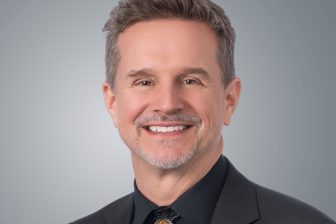
Drennan takes the helm as Otto begins producing its first flight-test vehicle and prepares to relocate to Jacksonville.
US clean-sheet business jet developer Otto Aerospace’s former chief operating officer Scott Drennan has succeeded Paul Touw as chief executive, a move the company says reflects its maturation from visionary start-up to a firm focused on the day-to-day work of developing and certificating a wholly new aircraft.
Drennan assumed the CEO role from Touw, who has left the company but remains an investor, on 23 April. Otto did not disclose the news until now because it wanted first to communicate the change to employees, customers and investors, says Drennan.
“We are moving into a time period where executing is super critical,” he tells FlightGlobal, noting Otto has completed the “vision-setting stage, the product-definition stage, the business-definition stage” and recently completed a preliminary design review (PDR) for Phantom 3500, its in-development four-passenger super-midsize business jet.
“It’s time to move forward on getting the supply chain in place, getting the production system set up, getting FTV1 [flight test vehicle one] built, and flying that aircraft,” Drennan adds. “We decided to make sure that focus was expressed from the top down.”

Otto is now assembling FTV1 at its Fort Worth, Texas headquarters but intends to complete the aircraft at Cecil airport in Jacksonville, Florida, where the firm plans to relocate later this year. Otto will initially work from an existing hangar there before moving to a new-build site. The company chose Jacksonville as its future headquarters after securing some $506 million in state and local incentives.
Otto’s timeline calls for completing Phantom’s first flight in late 2027 and beginning deliveries in 2030 or 2031, to launch customer Flexjet, which signed for 300 of the aircraft.
In disclosing the leadership change, Otto cites Drennan’s career experience and his leadership of both Phantom’s PDR and of a flight-test programme involving a long-range drone Otto developed in partnership with the US government.
“His mandate as CEO is to build on this foundation, to transform the Phantom 3500 from a visionary concept into a market reality, and to make Otto Aerospace a dominant force in next-generation aviation, including opportunities in defence unmanned aerial systems,” Otto says of Drennan.
Prior to joining Otto in 2022, Drennan spent much of his career in engineering roles at Bell, where he worked from 1993 until 2020, according to his LinkedIn profile.
Touw, who founded on-demand charter operator XOJet and took the Otto CEO job in 2022, could not be reached for comment.
Otto credits Touw with initiating a “renaissance at Otto Aerospace by recognising the potential in founder Bill Otto’s transformative work and having the conviction to build a new category of business jet around it”.
Bill Otto’s vision was to develop a jet optimising “laminar flow” – a term meaning smooth-flowing air. Air flowing smoothly past an aircraft generates less friction and drag, improving fuel efficiency.
Otto tested its laminar-flow-optimised design with its Celera 500L demonstrator, an aircraft with a unique fuselage that flew from 2018 to 2020.

Under Touw and Drennan, Otto shifted focus to the military drone programme and developing Phantom, which is to have 3,500nm (6,482km) of range. Phantom will have a windowless cabin (to improve laminar flow), but an advanced cabin monitor system will let passengers “see” outside the jet.
Drennan says Otto’s “computation fluid dynamics” code “predicts laminar flow and allows us to design wing shapes that are ready to go, rather than ready to be studied”.
Otto expects to achieve “natural laminar flow” along 90% of Phantom’s wings and 4.6m (15ft) of its fuselage.
Phantom will generate 35% less drag than competing jets, meaning it can have smaller engines that burn less fuel (twin Williams International J44-4 turbofans have been picked), executives have said. Less weight means other components like landing gear can be lighter, also.
Otto plans to build four FTVs ahead of Phantom’s certification.
Drennan estimates Phantom will cost roughly $1.5 billion to bring to market, including $1 billion for certification and another $500 million for the production facility and related equipment.
Otto is now seeking to raise additional funds through a Series C raise it aims to complete within six to eight months.
The post Scott Drennan named Otto CEO as Phantom programme shifts to execution first appeared on FlightGlobal.