

As turbofan airfoil shortage continues, Chromalloy sees more opportunity to sell its PMA-approved parts.
US aftermarket component supplier Chromalloy has added another turbofan airfoil to its aftermarket parts catalogue, a development it says reflects broad market demand for metallic parts that are difficult to manufacture and short in supply.
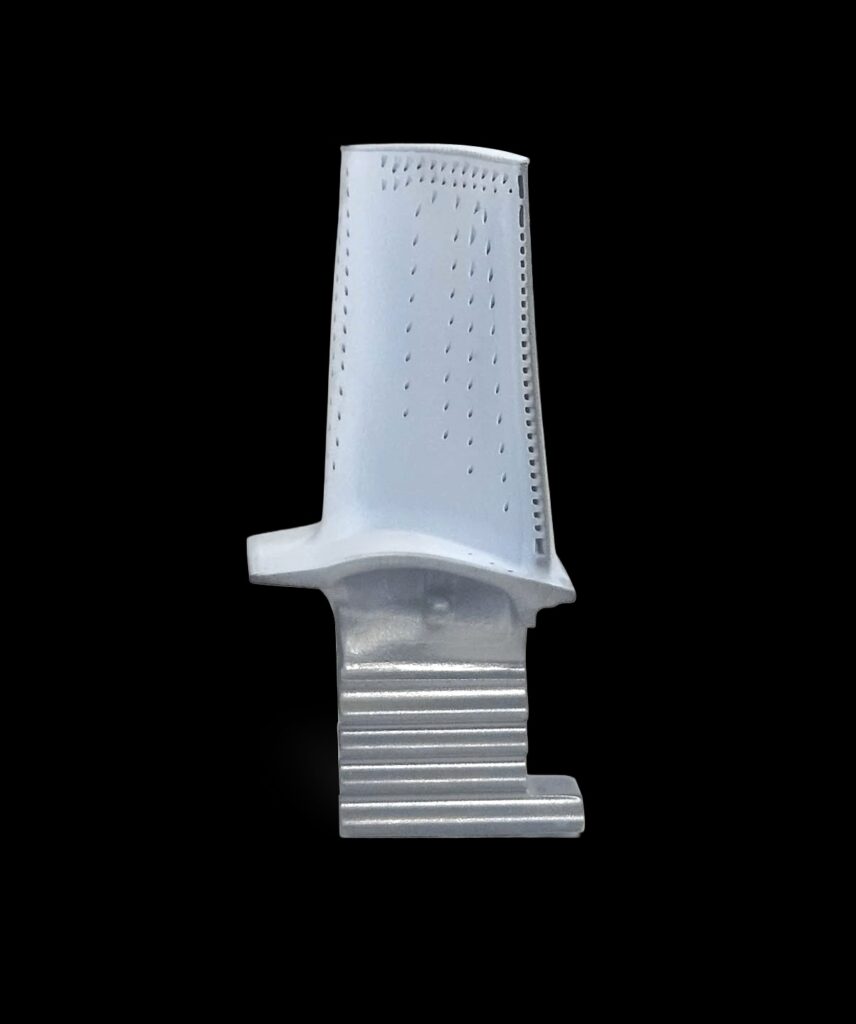
The Florida company on 22 September said it secured Federal Aviation Administration (FAA) approval to sell high-pressure turbine (HPT) stage-one blades it developed for International Aero Engines V2500 Select turbofans.
The green light came under an FAA Parts Manufacturer Approval (PMA), meaning the FAA has certificated that the Chromalloy-produced blades are similar in design function to OEM components and that they meet airworthiness standards.
“We are basically bringing to bear another source for these parts and… [relieving] the pressure in the overall ecosystem,” Chromalloy executive vice-president of engine parts and programmes Vijay Jayachandran tells FlightGlobal.
PMA providers like Chromalloy are alternative suppliers of components airlines would otherwise need to source from original equipment manufacturers. They pitch their parts as lower-cost options.
Chromalloy developed its new V2500 HPT stage-one blade under an agreement with European maintenance provider Lufthansa Technik. It will provide Lufthansa Technik with the blades but retains rights to sell them elsewhere.
Introducing the new blade required Chromalloy establish a “new anti-corrosion and multi-layer thermal barrier coating”, it says. Chromalloy has started low-rate production and will ramp output through 2027.
The firm now holds PMA approvals for five V2500 components, the others being HPT stage-two blades and high-pressure compressor (HPC) stages five, seven and eight blades. V2500s are one power option Airbus offered for its first-generation A320-family of jets.
“Each new approval adds a proven, cost-effective option for [customers’] V2500 fleets,” says Lufthansa Technik head of V2500 overhaul Sebastian Hagenmueller.

Chromalloy also has PMA approvals covering four CFM International CFM56 metallic components: HPT blades, nozzles and shrouds, and low-pressure turbine first-stage nozzles. CFM56s are the other A320 engine option and the only Boeing 737NG engine.
Chromalloy has long produced PMA-approved blades for GE Aerospace CF6-80C and Pratt & Whitney (P&W) PW4000 widebody aircraft turbofans.
But it only secured the CFM56 and V2500 PMAs in the last several years.
The firm is now working to ramp production amid strong demand, having recently invested $100 million to expand its airfoil operation in and near Tampa. Last year, under its BELAC joint venture, Chromalloy opened a new coatings and machining site in Oldsmar, Florida intended to produce 100,000 blades annually.
The company declines to specify current production levels.
“Everybody’s looking for these parts,” says Jayachandran. “We see a lot of opportunity for growth in these two engine platforms.”
Older jets still flying
Jayachandran notes airlines have delayed A320 and 737NG retirements, meaning a greater need for replacement components. Carriers are keeping the jets active because they have needed to pull newer A320neos and 737 Max from service due to the new-generation engines (PW1100Gs and CFM International Leaps) being less durable than planned. The durability problems have specifically involved airfoils.
Those factors have driven up airfoil demand, as has the AI data-centre boom (the sites are increasingly powered with electricity generated by aero-derivative turbines).
Executives at turbofan manufacturers have as recently as this month cited cast turbofan components as a major production constraint. To help address the problem, GE Aerospace on 8 September said it will acquire airfoil supplier Consolidated Precision Products.
Chromalloy’s Jayachandran calls airfoils “the most complex” and “most valuable” turbofan components, noting they must withstand conditions including 1,093°C (2000°F) temperatures and spinning at 10,000rpm.
“Manufacturing these parts is really complicated. Not everybody can make a single-crystal turbine blade with all the associated… castings, coatings, drilling,” he says, noting nearly one-in-three components fail to meet specification and must be tossed.
Chromalloy manufactures its blades in-house, starting “from the periodic table… We actually buy the elemental raw materials”, says Jayachandran.
In Tampa, Chromalloy smelts the raw material and produces “nickel-based superalloys” that are used to cast blades. It transfers unfinished blades to the Oldsmar site, where workers machine and drill the blades and apply multiple coatings, including thermal barriers.
The company does not produce components for the new-generation PW1100Gs or Leaps, though that could come down the road.
“We wait for these platforms to stabilise because it takes us many years to bring new parts to market,” says Jayachandran, noting Chromalloy focuses on “mature” products.
The post Chromalloy targets surging airfoil demand, secures another FAA approval first appeared on FlightGlobal.