


Thursday, October 15, 2026

DNA Study Tracks Long-Distance Migration in Peru

SYDNEY, AUSTRALIA—Analysis of DNA samples, archaeological evidence, and historical data suggests that people who lived along Peru’s Pacific coastline before the rise of the Inca Empire around A.D. 1400 were more mobile than had been previously thought, according to a statement released by the University of Sydney. Jacob Bongers of the University of Sydney said…

Early Iron Production Dated in Central Africa

PARIS, FRANCE—Evidence of iron production dated to the fifth century A.D. has been discovered at the Ndalambiri rock shelter in Angola, according to a report in La Brújula Verde. The rock shelter is known for its paintings of some 1,200 figures spread over a 200-foot-long span. Isis Mesfin of France’s National Museum of Natural History…

This prehistoric fish may explain how animals first walked on Earth

Scientists have peered inside the skull of a 380-million-year-old Antarctic fish that was closely related to the first animals to walk on land, revealing surprising clues about how life began its move out of the water. Using advanced neutron imaging, researchers discovered that Koharalepis jarviki had features suited for living near the water’s surface, including…

100-million-year-old bug had crab-like claws unlike any known insect

Deep inside 100-million-year-old amber from Myanmar, scientists uncovered a bizarre ancient bug with clawed front legs that look more like a crab’s pincers than anything seen in modern insects. The discovery is so unusual that researchers say these crab-like “chelae” evolved independently in this lineage, making it only the fourth known example of such structures…

Scientists discover the oldest wooden tools ever used by humans

Scientists have uncovered the oldest known hand-held wooden tools ever used by humans — and they’re an astonishing 430,000 years old. Buried for hundreds of thousands of years at an ancient lakeside site in Greece, the carefully carved wooden objects reveal that early humans were far more skilled and resourceful than once believed.

Bronze Age Pigeon Bones on Cyprus Studied

GRONINGEN, THE NETHERLANDS—According to a statement released by Antiquity, analysis of pigeon bones from the site of Hala Sultan Tekke, a harbor city on the island of Cyprus, suggests that the birds (Columba livia) were semidomesticated as early as 1400 B.C. This is about 1,000 years earlier than was previously thought based on the remains…

Whalers’ Remains Unearthed in Norway
Ancient Engineering

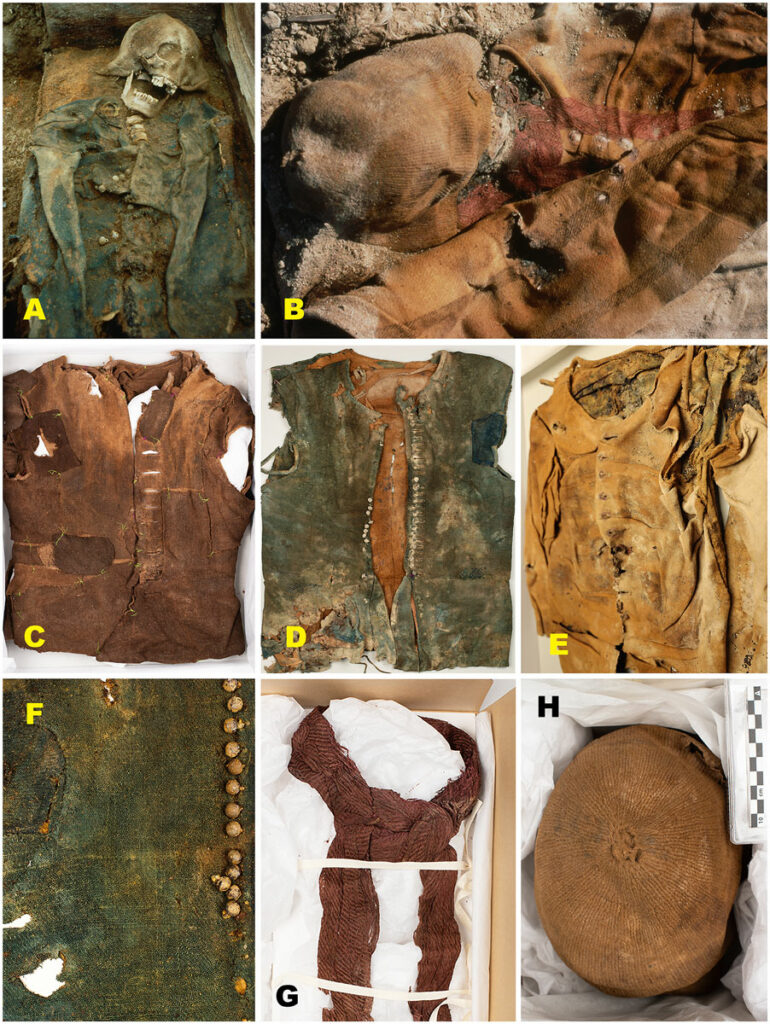
Whalers’ Remains Unearthed in Norway

Garments preserved in whalers' burials from the site of Likneset in Norway's Svalbard archipelago SVALBARD, NORWAY—The remains of 20 whalers have been uncovered in a High Arctic cemetery damaged by rapid warming by Lise Loktu of the Norwegian Institute for Cultural Heritage Research and Elin Therese Brødholt of Oslo University Hospital, according to a Live…

Early Herders in East Africa Continued to Collect Wild Foods

VANCOUVER, CANADA—Analysis of isotope levels in teeth from more than 100 people who lived between 9,500 and 200 years ago in Kenya and Tanzania suggests that people continued to fish, hunt wild game, and collect plants for food for more than 1,000 years after they began keeping livestock, according to a statement released by the…

Scientists solve 320-million-year mystery of reptile bone armor

Reptiles have been growing armor in their skin on and off for hundreds of millions of years, but scientists never fully understood how it evolved. A massive new evolutionary study shows these skin bones appeared independently in multiple lizard groups rather than coming from a single armored ancestor. Even more astonishing, Australian goannas lost this…