


Manufacturer aims to become first eVTOL LSA under revised FAA regulations.
From a distance, the AIR One prototype looks like an only slightly unconventional electric vertical take-off and landing (eVTOL) design, with thin, standalone wings, a twin tail, and a pair of motor-powered propellers fixed to four corners of the fuselage – yet another contender in a crowded but still latent urban air mobility (UAM) segment.
However, the aircraft differs from most of its better known UAM contemporaries. It is smaller for a start, with just two seats and a maximum take-off weight of 1,220kg (2,688lb).
And rather than pitching the platform at the Part 135 air taxi segment, Air, its Israeli developer, hopes the AIR One will be the first eVTOL programme certificated by the Federal Aviation Administration as a light sport aircraft (LSA) under the FAA’s amended Modernization of Special Airworthiness Certification (MOSAIC) rules.
The target demographic for the 240kg (550lb)-payload AIR One – which is due to make a reappearance at the EAA AirVenture show in Oshkosh next month – is recreational pilots. Many of them will be new to flying their own aircraft but want something different to everyday LSAs, according to chief executive and co-founder Rani Plaut. The company is also pushing an uncrewed cargo version and believes the platform could also have potential in the agricultural and military markets.
AIR – which was founded in 2017 and moved production and the bulk of its flight testing to the USA last year after opening an assembly and test flight facility near West Palm Beach, Florida – has been flying an unmanned prototype since 2023.
The aircraft received its FAA experimental airworthiness certificate last year and AIR, which claims to have more than 2,500 “pre-orders”, hopes to deliver its first customer aircraft in the experimental category by early 2027.
Unlike many larger eVTOL aircraft, the AIR One features a 7.5m (25ft) propeller-less wingspan that generates up to 60% of lift during forward flight, “significantly improving battery efficiency”, says the company. Under a patented design, those wings fold, reducing the width of the aircraft to 2.4m, and allowing storage in a standard garage, adds AIR One.
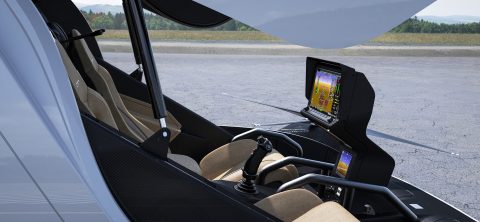
The company has also begun giving more detail about specifications, on 1 June announcing Dynon as its avionics provider with a version of its SkyView HDX flightdeck.
“We have been working with Dynon for two and a half years and they are a very good fit,” says Plaut. “It allows us to bring proven avionics capability into a fundamentally new aircraft environment that demands more than a standard integration, while keeping the simplicity and operational clarity that define how we think about flight.”
Like the Pipistrel Velis Electro – the first certificated electric LSA – the AIR One will have a flight endurance of around 1h between battery charges, significantly less than the up to 4h offered by rivals such as the amphibious Icon A5, which uses a Rotax 912 to power a push propeller behind the cabin.
However, Plaut does not see this as a barrier to prospects, suggesting the product’s main appeal will be its economics and ease of operation. “It’s a very simplified aircraft with no moving parts except the motors,” he says. “There is a pool of people that would really like to be in the air but are not because of hurdles that are to do with complexity of handling, the lack of envelope protection and price.”

What that price will be is uncertain. Early publicity suggested it might be under $200,000 but Plaut admits “it will be higher”. What is certain, he insists, is that the unit price once production has passed the 300-unit a year mark will be “significantly lower” than competitor LSAs. Those totals are achievable, he says. “We have the ability to produce thousands of aircraft. The demand is there. We just have to present the right product.”
The post AIR One’s sporting chance as MOSAIC paves the way first appeared on FlightGlobal.