


The Pentagon consumed thousands of precision guided missiles in the early weeks of the war, equivalent to several years of production.
The US government has racked up a bill of some $25 billion dollars over two months of combat operations in Iran.
Most of that figure is related to the expenditure of costly missiles and other precision guided munitions, thousands of which have been launched against Iranian targets.
The extent of war’s cost was revealed on 29 April during a legislative hearing before the House Armed Services Committee involving top Pentagon officials, including defence secretary Pete Hegseth.
Jules Hurst, comptroller and chief financial officer at the US Department of Defense, was asked by the committee’s top opposition lawmaker Congressman Adam Smith to provide an estimate of the cost of the war, known within the Pentagon as Operation Epic Fury.
“We’re spending about $25 billion on Operation Epic Fury,” Hurst says. “Most of that is in munitions.”
Long-range precision munitions emerged as a critical limitation within the first week of the US-Israeli war, launched at the end of February. That includes both offensive weapons like the AGM-158 Joint Air-to-Surface Standoff Missile (JASSM) and defensive systems like the PAC-3 air defence missile.
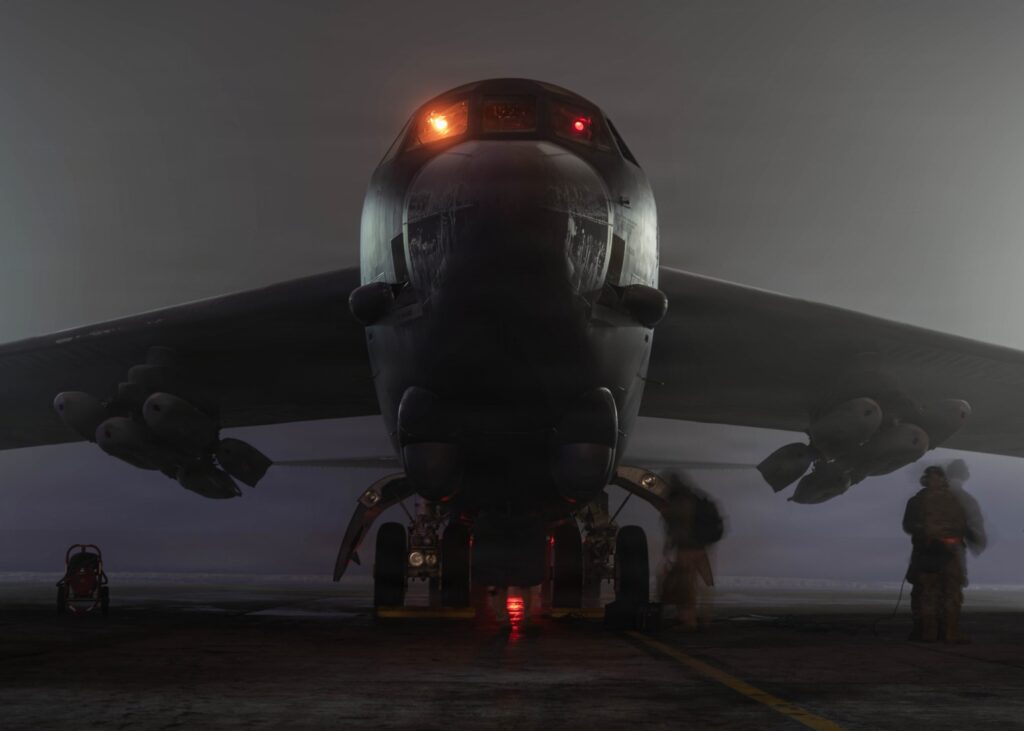
The US and Israel struck more than 5,000 targets in the first 10 days of the war. Photos and video emerged of Boeing B-52H bombers launching with heavy loads of stealthy JASSM cruise missiles, the basic version of which costs over $1 million, according to 2026 budget documents.
Newer, extended-range variants cost more than $2.5 million each.

Perhaps even more significant than the cost is the time it could take to replace such a large volume of complex weaponry.
A single B-52 can carry up to 20 JASSMs, while Lockheed Martin is currently producing less than 1,000 units per year. The defence manufacturer has opened a second production line to build toward an annual production rate of 1,100 JASSMs and the related Long-Range Anti-Ship Missile, but that is still an ongoing project.
Ship-launched Tomahawk cruise missiles were being fired at similarly high rates. The Center for Strategic and International Studies (CSIS) estimates the US military expended over 1,000 units of both the JASSM and Tomahawk between late February and mid-April – when Washington and Tehran agreed to a temporary ceasefire.
That is equal to roughly four years of industrial production for both missile systems and 25-33% of pre-war stocks.
Those staggering quantities, much of the volume logged within the first few days of the war, led the Pentagon to quickly shift bombing operations to relying on cheaper and more plentiful Joint Direct Attack Munitions – gravity bombs converted into GPS-guided weapons using a simply bolt-on kit.
US President Donald Trump bragged of a virtually unlimited supply” of JDAM-equipped bombs in early March.
Compared to offensive weapons, the consumption figures for air defence missiles are even worse. These were deployed heavily to fend off massed waves of Shahed one-way attack drones launched by Iran at US and Israeli bases and civil infrastructure across the Persian Gulf region.
The CSIS estimates that up to 61% of Patriot PAC-3 stockpiles were used up in six weeks of combat, with each of the 1,430 missiles carrying a $4 million price tag. That quantity represents nearly four years of current production, although Lockheed in January committed to expanding PAC-3 output from 600 units per year to 2,000 by 2030.
More capable anti-ballistic missile interceptors like the SM-6 and Terminal High Altitude Area Defense system were relied upon less but have lower production rates and will take even longer to replenish.
Each THADD interceptor costs more than $15 million and up to 290 may have been fired during the Iran conflict – 80% of the pre-war stockpile.
With figures like that, it is easy to see why munitions are responsible for the lion’s share of expenditures during Epic Fury.
However, Hurst says there have been other significant costs, including operations and maintenance items like fuel and spare parts. Replacing equipment lost in combat is also being considered as a future cost of the war.
The US Air Force has lost four Boeing F-15E fighters, at least one Boeing KC-135 tanker, a Boeing E-3 airborne warning and control jet, a Fairchild Republic A-10 attack fighter and numerous General Atomics MQ-9A Reaper uncrewed aircraft throughout the campaign.
Two Lockheed Martin MC-130J special operations transports and an unknown number of Boeing MH-6 Little Bird helicopters were also abandoned and destroyed by US forces during the operation to rescue an F-15E weapon systems officer shot down inside Iran.
One Lockheed Martin F-35A has also been damaged to an unknown degree after being hit by Iranian air defence. The fighter managed to return to base in an unconfirmed condition.

Hurst says the Trump Administration plans to submit a supplemental budget request to the Congress to cover the various expenses related to the war.
“We will formulate a supplemental through the White House, that will come to Congress once we have a full assessment of the cost of the conflict,” the Pentagon comptroller says.
Officials in Washington and Tehran are seeking a diplomatic end to the fighting, which is largely on pause for several weeks to allow for negotiations. The US continues to seize Iranian-linked commercial ships entering or exiting the Persian Gulf, including an air assault by US Marines onto a container vessel last week.
Both Washington and Tehran have declared blockades on ship traffic passing through Strait of Hormuz, although some vessels have transited the waterway in recent days.
The post Washington has spent $25 billion on Iran war, mostly on munitions first appeared on FlightGlobal.