


Wednesday, October 14, 2026

Roman Mosaic Uncovered in Turkey’s Black Sea Region

TOKAT, TURKEY—Hürriyet Daily News reports that mosaics dated to the second century A.D. have been uncovered in north-central Turkey. The images feature a female figure and Greek inscriptions meaning “luxury” and “abundance.” First uncovered in 2025 through an illegal excavation in Zile, the mosaics were subsequently brought to light during rescue excavations conducted by experts…
Ana Inês Inácio Designs the Future of Wireless

When Ana Inês Inácio goes to work at the Netherlands Organization for Applied Scientific Research (TNO) in The Hague, she thinks about signals most people never notice: radio waves moving between satellites, sensors, and future wireless networks.The integrated circuits the research scientist designs lay the foundation for next-generation RF sensor systems critical to advancing radar…

Neanderthals May Have Used Rhino Teeth as Tools

ABERDEEN, SCOTLAND—Neanderthals may have used rhinoceros teeth as heavy-duty tools, Science News reports. Some 100,000 years ago, the narrow-nosed rhino (Stephanorhinus hemitoechus) and Neanderthals both lived in Europe. Alicia Sanz-Royo of the University of Aberdeen and her colleagues used microscopes to analyze marks on rhinoceros teeth recovered from Spain’s El Castillo site and France’s Pech-de-l’Azé…

Scientists Explore Neolithic Crannog in Scotland
Ancient Engineering

Scientists Explore Neolithic Crannog in Scotland

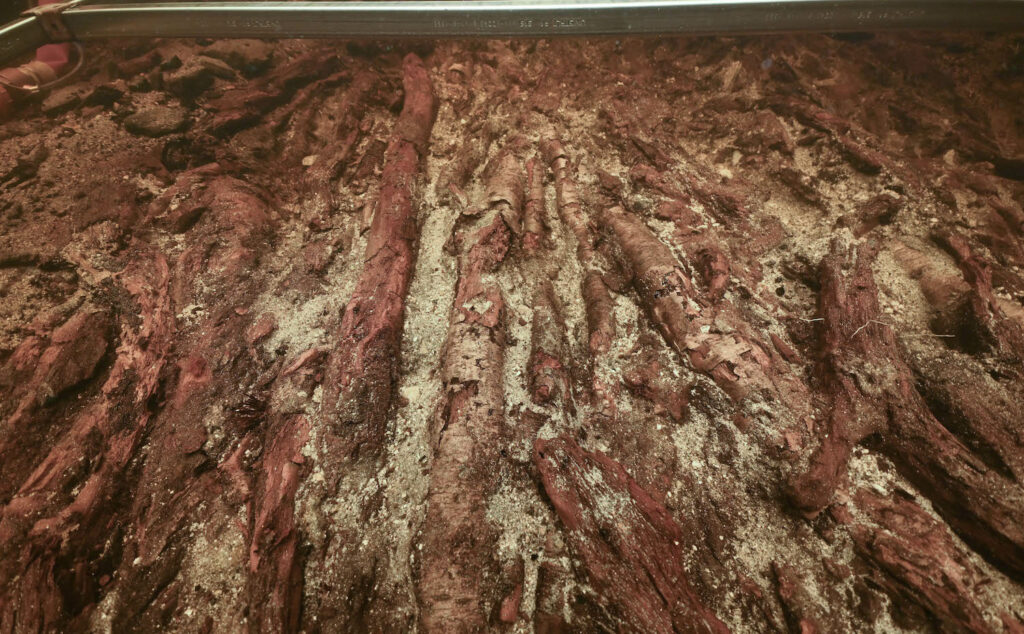
Timber platform of the crannog in Loch Bhorgastail, Scotland SOUTHAMPTON, ENGLAND—According to a statement released by the University of Southampton, a crannog in shallow waters in Loch Bhorgastail on Scotland’s Isle of Lewis has been evaluated by researchers from the University of Southampton and the University of Reading with a technique called stereophotogrammetry, which involves…