
From asking to doing: How the world is putting ChatGPT to work
New OpenAI Signals data shows how people use ChatGPT worldwide, with country-level insights on adoption, usage trends, and evolving behavior.
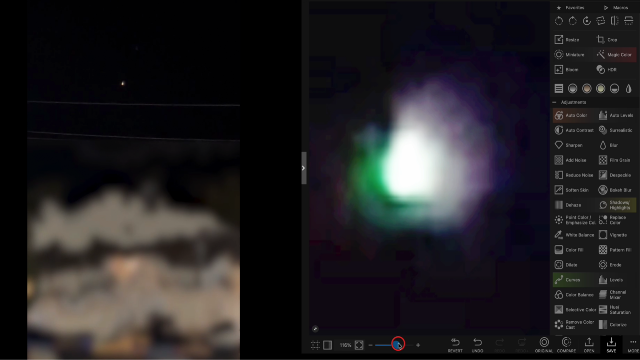
Date of sighting: Oct 2023Location of sighting: USA (no other info given)Source: Dept of WarLink: https://www.war.gov/UFO/?releaseDate=Release+06&release=06#LLE-UAP-PR002-Unresolved-UAP-Report-Colorado-October-2023I was looking at the Dept of War website at…
Read More
Background Movements for civil rights were a worldwide series of political movements for equality before the law that peaked in the 1960s. In many situations…
Read More
Background The following document was obtained by The Black Vault through the Freedom of Information Act (FOIA), and was part of the “Stargate Collection” release.…
Read MoreNew OpenAI Signals data shows how people use ChatGPT worldwide, with country-level insights on adoption, usage trends, and evolving behavior.
OpenAI and the American Psychological Association advance evidence-based guidance, resources, and safeguards for responsible AI use and youth mental health.
ChatGPT introduces improved GPT-5.6 Sol with better accuracy and consistency, plus expanded access for free users and unlimited everyday chats with GPT-5.6 Luna.
arXiv:2608.04077v1 Announce Type: new Abstract: Evaluating financial AI agents requires criteria aligned with real professional work. Existing rubric methods typically derive criteria from task prompts or model outputs, overlooking tacit standards visible only in practitioner deliverables. We introduce FinProBench, a benchmark for professional financial tasks, and Role-Grounded Rubric Construction (RGRC), a reusable pipeline that derives…
arXiv:2608.04071v1 Announce Type: new Abstract: Automatically generating professional multimodal reports comprising both textual analysis and visual charts from structured tabular data is a critical challenge in data intelligence. Existing methods suffer from fixed linear pipelines and isolated subtask processing, which hinder joint optimization of factual accuracy, visual quality, and narrative coherence. To address these issues,…
arXiv:2608.04066v1 Announce Type: new Abstract: How do you verify a long-horizon agent when its own state and self-reports are exactly what you cannot trust? We present an agent instrument built so that verification is structural rather than post-hoc. A deterministic Executive owns all belief; a language model may only file typed proposals, and a claim…
arXiv:2608.04012v1 Announce Type: new Abstract: Artificial intelligence systems are increasingly expected to operate over repeated cycles of interaction, adaptation, and update rather than through isolated one-shot outputs. This raises a fundamental theoretical question: can an AI system persist indefinitely without incurring unbounded structural aging? This paper develops a long-run persistence framework for AI systems based…
This is today’s edition of The Download, our weekday newsletter that provides a daily dose of what’s going on in the world of technology. Google’s AI empire is being reshaped. Here’s what’s changed. After a wave of painful losses in the tech talent wars, delays to its next flagship model, and murmurings of poor morale,…
arXiv:2608.04095v1 Announce Type: new Abstract: Large language model (LLM) agents are increasingly used as personalized assistants in high-stakes domains such as financial advising, yet it remains unclear whether they can maintain and update an individualized user model over long horizons. Existing personalized-memory benchmarks primarily test factual retention or rely on weakly constrained model-generated trajectories, leaving…
Enterprise Document Intelligence [Vol.1 #5octies] - Rules propose, LLM validates: six deterministic signals on span-level typography surface heading candidates, one bounded loop keeps the real ones, and the same toc_df drops back into the RAG pipeline The post Building Document Structure with Loop Engineering: Recovering a PDF’s Outline from Body Typography for RAG appeared first…