
Putting frontier cyber models in more trusted hands
Approved Daybreak partners can use OpenAI’s frontier cyber models to deliver authorized, governed cybersecurity services to customers.
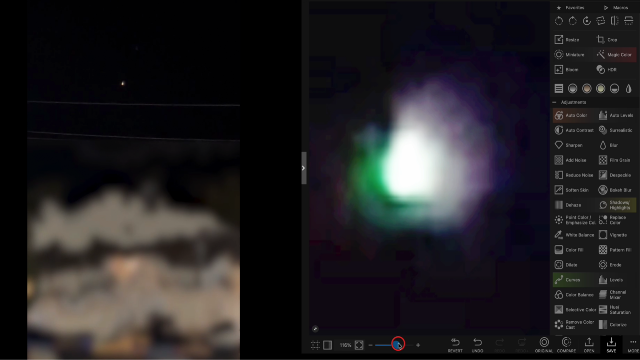
Date of sighting: Oct 2023Location of sighting: USA (no other info given)Source: Dept of WarLink: https://www.war.gov/UFO/?releaseDate=Release+06&release=06#LLE-UAP-PR002-Unresolved-UAP-Report-Colorado-October-2023I was looking at the Dept of War website at…
Read More
Background Movements for civil rights were a worldwide series of political movements for equality before the law that peaked in the 1960s. In many situations…
Read More
Background The following document was obtained by The Black Vault through the Freedom of Information Act (FOIA), and was part of the “Stargate Collection” release.…
Read MoreApproved Daybreak partners can use OpenAI’s frontier cyber models to deliver authorized, governed cybersecurity services to customers.
Meet GPT-5.6-Cyber, OpenAI’s cybersecurity-specific model available through Daybreak Red for authorized vulnerability research, exploit validation, and security testing.
OpenAI CFO Sarah Friar shares five lessons for building an AI-native finance function, from automated forecasting to stronger controls and AI ROI.
Model ML uses GPT-5.6 Sol to carry finance work from research and analysis through editable, traceable PowerPoint decks and Excel workbooks.
OpenAI sent Governor Greg Abbott a letter outlining its commitment to responsible AI infrastructure in Texas. The letter supports reliable, transparent growth that benefits Texans.
arXiv:2608.06394v1 Announce Type: new Abstract: Multi-label node classification is an important yet challenging task in graph learning, where nodes exhibit multiple semantics simultaneously. Existing methods for multi-label node classification can effectively model multiple labels, while only considering in-domain scenarios where the model needs to be trained and tested within the same graph domain, resulting in…
This story originally appeared in The Algorithm, our weekly newsletter on AI. To get stories like this in your inbox first, sign up here. Last week, I headed 30 miles south of San Francisco to a hotel in Mountain View, California, to join some of the most accomplished, and some of the most promising, AI…
arXiv:2608.06410v1 Announce Type: new Abstract: Automated agent design improves agent harnesses through iterative revision, evaluation, and feedback summarization. Existing methods are largely candidate-centric: cross-round experience is organized around candidate agents, which leaves the repair progress implicit. This causes inefficient repair targeting, slow consolidation of partial progress, and propagation of ineffective interventions across rounds. Therefore, we…
arXiv:2608.06402v1 Announce Type: new Abstract: Community detection is a fundamental task in graph analytics that aims to identify cohesive groups of entities with similar behaviors or interests. Classic objective-driven methods struggle with complex graph structures, while deep-learning approaches improve performance at the expense of interpretability and rely on labeled data and training. Large language models…
arXiv:2608.06400v1 Announce Type: new Abstract: Reward models are central to learning from human preferences, yet identifying what drives their predictions remains challenging. Recent sparse Mixture-of-Experts (MoE) reward models seek to improve interpretability by routing prompts to specialized experts and characterizing experts through examples with high routing weights. However, routing weights only reveal which prompts an…