
The LLM Judge That Kept Agreeing With Itself
What a production incident taught me about trusting a model to judge another model's work The post The LLM Judge That Kept Agreeing With Itself appeared first on Towards Data Science.
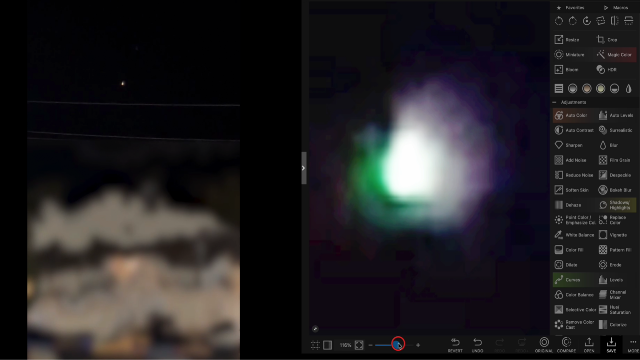
Date of sighting: Oct 2023Location of sighting: USA (no other info given)Source: Dept of WarLink: https://www.war.gov/UFO/?releaseDate=Release+06&release=06#LLE-UAP-PR002-Unresolved-UAP-Report-Colorado-October-2023I was looking at the Dept of War website at…
Read More
Background Movements for civil rights were a worldwide series of political movements for equality before the law that peaked in the 1960s. In many situations…
Read More
Background The following document was obtained by The Black Vault through the Freedom of Information Act (FOIA), and was part of the “Stargate Collection” release.…
Read MoreWhat a production incident taught me about trusting a model to judge another model's work The post The LLM Judge That Kept Agreeing With Itself appeared first on Towards Data Science.
Improve your proficiency with Claude Code. The post How to Effectively Align Your Intent with Claude Code appeared first on Towards Data Science.
SWE-bench, Terminal-Bench, SlopCodeBench, ProgramBench, and more. Explore the top 10 open-source benchmarks for evaluating AI coding agents.
Three orientations, three different skill maps, and how to find the one that fits where you actually stand.
Introducing AI Futures, a new OpenAI blog exploring how transformative AI could reshape power, governance, the economy, and individual freedom.
Why retrieval quality should be a property of the system, not of the question's wording? Rebuilding knowledge layer with graph traversal on every query, bitemporal edges, and two-threshold entity resolution. The post Making the Knowledge Layer a Graph You Actually Traverse appeared first on Towards Data Science.
A hands-on guide to fine-tuning LLMs for the real world The post How to Fine-Tune an LLM: An End-to-End Guide appeared first on Towards Data Science.
Enterprise Document Intelligence [Vol.1 #14A] - Three questions tell you which shape a document collection has, and each shape wants a different architecture The post Three Kinds of RAG Corpus, and What It Costs to Build for the Wrong One appeared first on Towards Data Science.
arXiv:2608.18086v1 Announce Type: new Abstract: The growth of open-weight foundation models (OWFMs) has prompted the AI community to re-evaluate strategies for effective downstream governance. Although model cards have been widely adopted as transparency artifacts in model repositories, existing frameworks often fail to adequately inform downstream developers and users about the distinct safety challenges posed by…
arXiv:2608.18081v1 Announce Type: new Abstract: Artificial agentic systems increasingly operate as behavioral systems by interacting with dynamic environments, pursuing goals, and adapting over time. Yet, current evaluation methods largely focus on performance outcomes, not the underlying behavioral processes that produce them. This paper argues that AI agents must be evaluated like other behavioral systems: through…