
Advancing price-performance for developers with GPT‑5.6 in Kiro
GPT‑5.6 is now available in Kiro, helping developers plan, build, review, and test software with better price-performance.
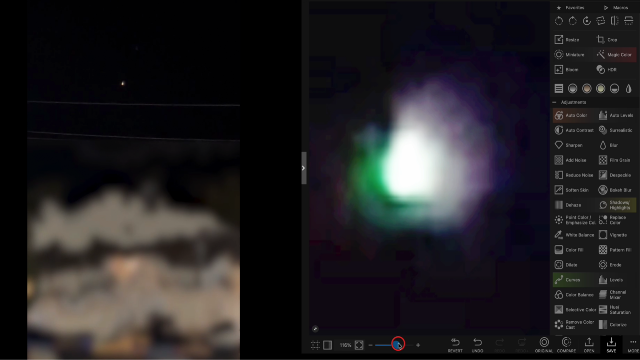
Date of sighting: Oct 2023Location of sighting: USA (no other info given)Source: Dept of WarLink: https://www.war.gov/UFO/?releaseDate=Release+06&release=06#LLE-UAP-PR002-Unresolved-UAP-Report-Colorado-October-2023I was looking at the Dept of War website at…
Read More
Background Movements for civil rights were a worldwide series of political movements for equality before the law that peaked in the 1960s. In many situations…
Read More
Background The following document was obtained by The Black Vault through the Freedom of Information Act (FOIA), and was part of the “Stargate Collection” release.…
Read MoreGPT‑5.6 is now available in Kiro, helping developers plan, build, review, and test software with better price-performance.
arXiv:2608.20384v1 Announce Type: new Abstract: Multimodal affect and behaviour classifiers that fuse heterogeneous text, audio, and visual streams must simultaneously achieve competitive accuracy and produce human-understandable explanations of the cues driving their decisions -- a dual objective that current high-capacity models, notably Transformers, only partially address. While Transformers attain strong predictive performance, their distributed representations…
arXiv:2608.20379v1 Announce Type: new Abstract: Advances in large language models (LLMs) have fueled a wave of research into agency: the ability to reason, plan, and act. This effort has produced agentic frameworks that orchestrate perception, memory, and decision-making around powerful LLM backbones. With the advent of large multimodal models (LMMs), these systems can process and…
arXiv:2608.20378v1 Announce Type: new Abstract: Safety alignment in Large Language Models (LLMs) is often superficial, relying on refusal mechanisms that trigger only at the final stages of generation without erasing the foundational knowledge of harmful concepts acquired during pretraining. This study demonstrates that this architectural disconnect leaves models vulnerable to Semantic Camouflage -- adversarial attacks…
arXiv:2608.20342v1 Announce Type: new Abstract: Large language model (LLM) coding agents start each session with an empty context window, discarding accumulated knowledge from prior work. We present PrimeAgentOrchestrator (PAO), a system that spawns new instances of Claude Code -- Anthropic's terminal-based coding agent -- pre-loaded with relevant memories compiled from the user's existing personal databases.…
People have been talking to each other for at least 100,000 years, as best we can tell. And in all that time, there has been only one thing in the world that could learn a human language to perfect fluency: a human child. Now there are two. Four short years after the release of ChatGPT,…
This is today’s edition of The Download, our weekday newsletter that provides a daily dose of what’s going on in the world of technology. Kids outlearn AI—and we still don’t know why Teaching a computer to use human language requires an inhuman amount of data. An LLM can easily churn through a hundred thousand times…
This article is from Making AI Work, MIT Technology Review’s limited-run newsletter examining how to apply LLMs across industries. To receive it in your inbox, sign up here. Chatbots took many schools by surprise upon their release a few years ago. Suddenly, students carried an app in their phones that could magically answer almost any…
Enterprise Document Intelligence [Vol.1 #14D] - The index lists what the case type demands before any folder is opened, and the two questions worth building for are not retrieval questions at all The post Parse the Folder, Not Just the PDFs: The Relational Tables RAG Needs on a Case File appeared first on Towards Data…
From Kaplan-Meier curves to hazard ratios with runnable Python Code throughout The post Survival Analysis and the Cox Proportional Hazards Model: A Beginner-Friendly Guide appeared first on Towards Data Science.