
When to Use Claude Code and When to Use Codex
Learn where which coding agent is best The post When to Use Claude Code and When to Use Codex appeared first on Towards Data Science.
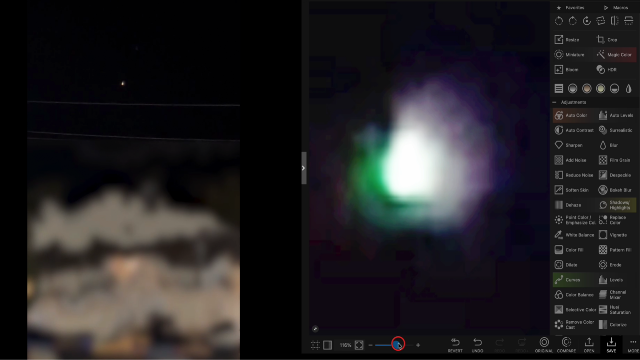
Date of sighting: Oct 2023Location of sighting: USA (no other info given)Source: Dept of WarLink: https://www.war.gov/UFO/?releaseDate=Release+06&release=06#LLE-UAP-PR002-Unresolved-UAP-Report-Colorado-October-2023I was looking at the Dept of War website at…
Read More
Background Movements for civil rights were a worldwide series of political movements for equality before the law that peaked in the 1960s. In many situations…
Read More
Background The following document was obtained by The Black Vault through the Freedom of Information Act (FOIA), and was part of the “Stargate Collection” release.…
Read MoreLearn where which coding agent is best The post When to Use Claude Code and When to Use Codex appeared first on Towards Data Science.
This article walks through what each technique actually does, why skipping them costs real money and real latency, and then gets hands-on with five specific methods people are running in production right now.
A practical framework for choosing the right tools at each layer of your local AI setup, from model serving to context retrieval.
How we stopped reviewing every agent action and started routing human attention where it actually mattered The post Human-in-the-Loop Without Killing Throughput appeared first on Towards Data Science.
A hands-on guide to defining specialist agents and coordinating their work in the Codex CLI The post From One Agent to a Team: Understanding Codex Subagents appeared first on Towards Data Science.
Our decision to wind down our contract providing OpenAI models to Cursor following its acquisition by SpaceX.
Be a better communicator with LLM programming The post Why Claude Code Time Estimates Are Poor appeared first on Towards Data Science.
How to run the backend locally with Docker or in the cloud The post Connecting My LangGraph AI Agent to Postgres appeared first on Towards Data Science.
arXiv:2608.26114v1 Announce Type: new Abstract: Calculation-intensive financial question answering requires exact reasoning over structured rates, temporal conditions, numerical formulas, and rule-based constraints. Although Large Language Models (LLMs) perform strongly on natural language tasks, they often produce numerically incorrect yet plausible answers when solving multi-step financial calculations. To address this limitation, we introduce CIFQA (Calculation-Intensive Financial…
arXiv:2608.26113v1 Announce Type: new Abstract: We present PICasso, an AI-assisted framework for automated synthesis, verification, and optimization of photonic integrated circuits (PICs) from natural-language specifications. PICasso couples a structured NL -> YAML -> GDS generation pipeline with PDK aware knowledge injection, automated placement and routing, DRC/LVS validation, and SAX-based photonic simulation. To systematically evaluate AI-driven…