
OpenAI extends cyber access to Ukraine for civilian defense
OpenAI is extending access to its Daybreak program to the Government of Ukraine to support the cyber defense of civilian infrastructure.

The Federal Aviation Administration (FAA) released 20 pages of training materials concerning the collection, processing, and analysis of biological evidence following fatal aviation accidents. The…
Read More
Larry W. Bryant was a UFO researcher, writer, and government transparency advocate who pursued federal records through the Freedom of Information Act (FOIA). His work…
Read MoreOpenAI is extending access to its Daybreak program to the Government of Ukraine to support the cyber defense of civilian infrastructure.
arXiv:2609.22410v1 Announce Type: new Abstract: Inferring 3D cellular properties from 2D microscopy is difficult when a reference instrument reports only population statistics rather than labels for individual cells. Here we develop a population-supervised framework that maps single 2D red-cell images to latent biophysical quantities and aggregates them to mean corpuscular volume, red-cell distribution width and…
arXiv:2609.22408v1 Announce Type: new Abstract: AI systems are becoming participants in the evaluation and use of scientific research. They encounter citation counts, download statistics and lists of popular articles developed around human readers, but the collective consequences of these signals for artificial readers remain uncertain. This paper adapts the Music Lab design to a market…
arXiv:2609.22353v1 Announce Type: new Abstract: Mobile river monitoring robots must interpret obstacles and water boundaries that geographic waypoints alone cannot describe. On resource constrained platforms, converting imperfect visual predictions into timely and inspectable guidance is a distinct challenge. An object label or steering command does not explain which evidence supports a decision or when that…
arXiv:2609.22277v1 Announce Type: new Abstract: Visual impairment affects over 2.2 billion people worldwide, yet conventional white canes cannot detect elevated hazards or provide semantic environmental context. Existing AI-assisted navigation systems typically rely on expensive hardware or cloud connectivity, limiting accessibility in resource-constrained settings. This paper presents an affordable ($88 USD), fully offline AI-integrated smart cane…
arXiv:2609.22161v1 Announce Type: new Abstract: Medical large language models are commonly trained on mixtures of didactic data (e.g., textbooks) and clinical data (e.g., patient records), yet how these data types differentially shape model capabilities remains unclear. We address this issue with token-matched experiments that vary the didactic-to-clinical ratio and analyze how data composition affects performance,…
Delia Ramirez, a Democratic US representative from Illinois, has announced a plan to introduce new legislation to terminate the surveillance tower program along the US southern border. The announcement comes just days after publication of an MIT Technology Review investigation, “Dying on Camera,” in which we looked at deaths along the border that took place…
Shubnam was packing boxes for a move into a new home when their friend sent them an Instagram video. The footage had only been up for a few hours, but it was days old, recorded at a Delhi protest this spring against a bill that would have narrowed the legal recognition for transgender people in…
Brace yourself: It turns out AI is being optimized for cheating. OpenAI’s agents hacked into Hugging Face to get the answers to a cybersecurity test. Next, they solved a prestigious math problem (or just stole from two top mathematicians’ answer sheets). Anthropic’s models have also hacked into other companies’ systems four times already. And that’s…
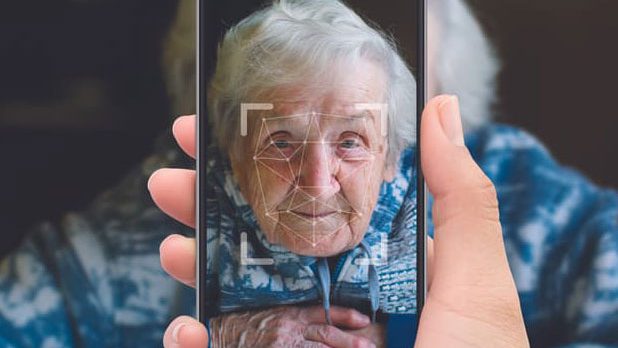
This is today’s edition of The Download, our weekday newsletter that provides a daily dose of what’s going on in the world of technology. Smart glasses are already causing havoc in India When Shubnam saw an Instagram video of a Delhi protest they had attended, they realized a content creator wearing Meta smart glasses had…