Thursday, October 15, 2026

TW3Cast: A Frozen Router of Lightly Fine-Tuned Foundation Models for Time-Series Forecasting on GIFT-Eval, Selected Entirely on the Training Split

arXiv:2609.28506v1 Announce Type: new Abstract: TW3Cast is a time-series forecasting system that reaches position 3 of 130 entries on the GIFT-Eval benchmark by mean MASE rank, as of 2026-09-14. The two entries above it belong to the leaderboard's agentic category, multi-step systems that use agents or language models to reason about, generate or select forecasts.…

BaseCamp — An Agentic AI Framework for Automating DNA Sequencing Data Pipelines

arXiv:2609.28557v1 Announce Type: new Abstract: DNA sequencing pipelines, spanning quality control, alignment, variant calling, and annotation, are now reliably executed by workflow management systems that orchestrate established bioinformatics tools at scale. What remains manual is the decision layer surrounding that execution: selecting quality thresholds appropriate to a sample and platform, adjudicating borderline variant calls, diagnosing…

Pistis Technical Report

arXiv:2609.28554v1 Announce Type: new Abstract: We introduce the Pistis model family, comprising 27B- and 9B-parameter multimodal large language models built on Qwen3.6 and Qwen3.5, respectively, and developed through a general and scalable post-training framework. The framework first establishes a strong foundation through large-scale multimodal supervised fine-tuning (SFT). Building on this SFT foundation, we propose Interleaved…

PAWS: Policy-driven Agentic World Simulation

arXiv:2609.28547v1 Announce Type: new Abstract: Policy interventions propagate through public communication, institutional decisions, and stakeholder responses, yet datasets for financial multi-agent simulation rarely connect these processes to temporally aligned historical evidence. We introduce PAWS, a Policy-driven Agentic World Simulation dataset covering 36 verified U.S. financial and economic policy episodes, 12,727 policy-linked news records, and 65,291…

Young organs may not be a fountain of youth for recipients

Around this time last year I was attending an aging conference in Manchester, listening to a talk about fly aging, when my phone started pinging. News outlets were reporting that a hot mic had caught Russia’s and China’s leaders discussing the possibility of living forever. “With the developments of biotechnology, human organs can be continuously…

The Pentagon wants $30 million to build an AI-powered lie detector
AI

The Pentagon wants $30 million to build an AI-powered lie detector

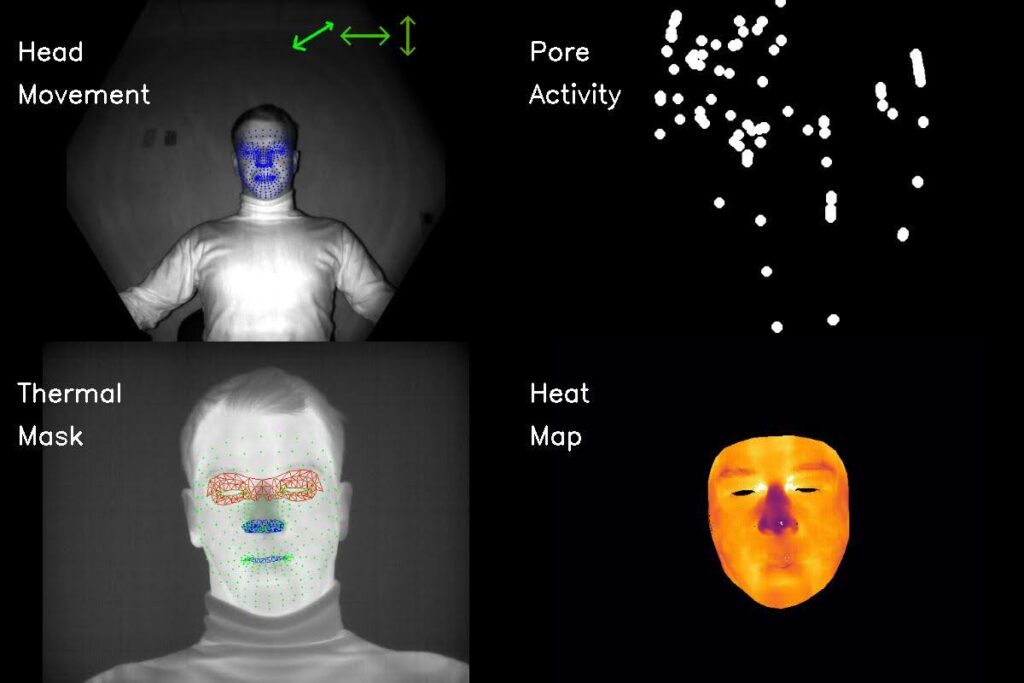
The US government wants to spend $30.3 million over the next five years on an improved form of lie detector, according to a Department of Defense budget request. The program, called Polygraph+ or Polygraph Next, will focus on scoring algorithms that use artificial intelligence and machine learning and on a technique called “standoff sensing,” which…