


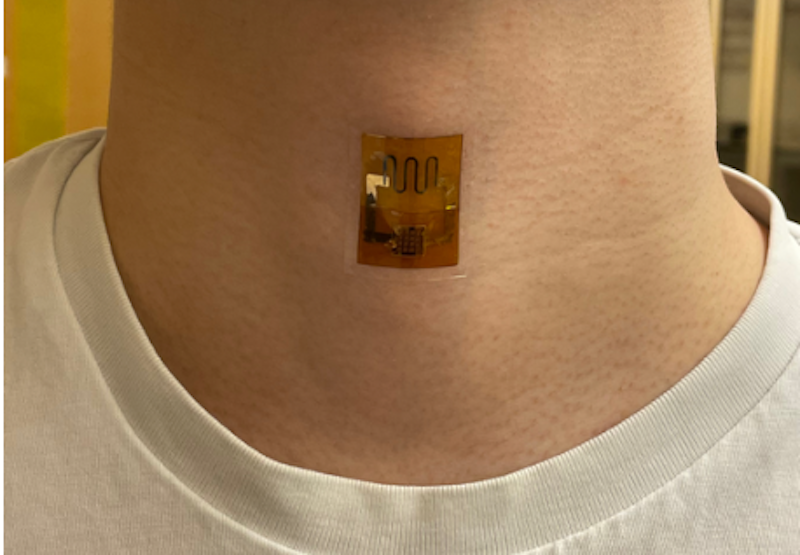
At the University of Massachusetts Amherst researchers have developed a method to engineer a biofilm that converts the energy created during evaporation into electricity. So, yes, it’s a bacteria skin patch that can create electricity. It may not power your home or car, but the biofilm has the promise to create self-powering wearables. here’s more from Sensor Tech Research:
“This is a very exciting technology,” says Xiaomeng Liu, graduate student in electrical and computer engineering in UMass Amherst’s College of Engineering and the paper’s lead author. “It is real green energy, and unlike other so-called ‘green-energy’ sources, its production is totally green.”That’s because this biofilm—a thin sheet of bacterial cells about the thickness of a sheet of paper—is produced naturally by an engineered version of the bacteria Geobacter sulfurreducens. G. sulfurreducens is known to produce electricity and has been used previously in “microbial batteries” to power electrical devices. But such batteries require that G. sulfurreducens is properly cared for and fed a constant diet. By contrast, this new biofilm, which can supply as much, if not more, energy than a comparably sized battery, works, and works continuously, because it is dead. And because it’s dead, it doesn’t need to be fed. For further information see the IDTechEx report on Battery Elimination in Electronics: Market Impact IoT, 6G, Healthcare, Wearables 2021-2041.
And just in case you don’t have an inside line on a prototype bacteria power-generating skin patch, here’s an article from the Adafruit Learning System on powering your wearables!