


The deal has apparently not received congressional approval, as is typical for large exports of military systems.
The Trump Administration intends to approve the export of fighter engines to Turkey as part of Ankara’s efforts to develop a new indigenous fifth-generation fighter aircraft.
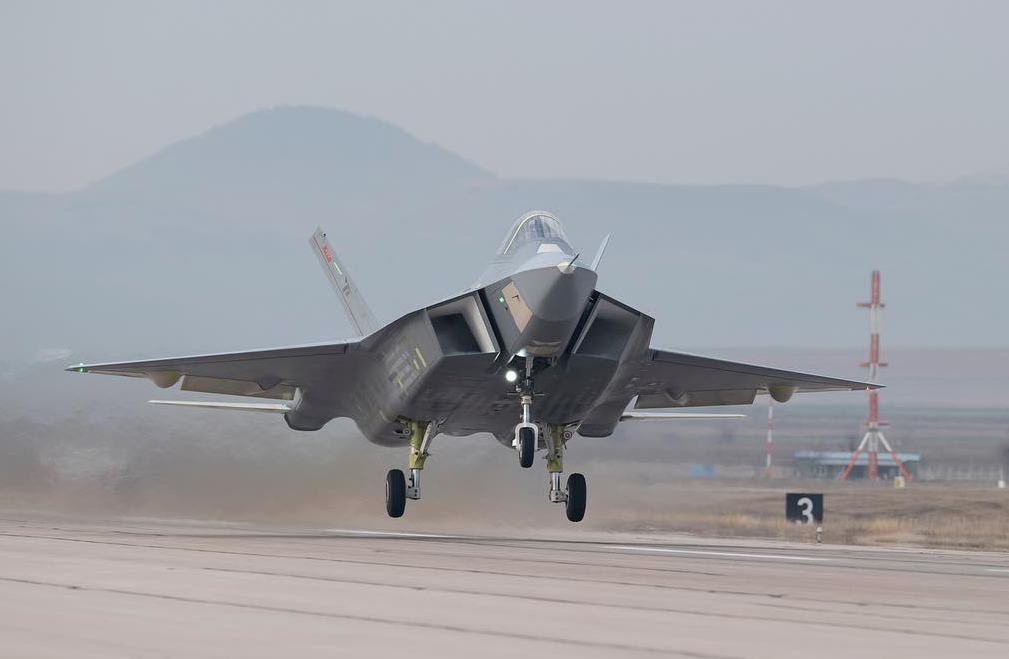
The deal, first reported by Reuters, will see Turkey acquire “dozens” of F110 turbofans from GE Aerospace. Ankara has been seeking 80 F110s to power the twin-engined Turkish Aerospace (TAI) Kaan fighter, which is currently in development.
Notably, the sale appears to be proceeding without the consent of congressional lawmakers, who have oversight and approval authority over large exports of defence hardware.
“The administration informed me it would once again bypass congressional review for more than $700 million in defence articles to the Turkish military,” says Congressman Gregory Meeks, ranking opposition member of the House Foreign Affairs Committee.
That committee, and its equivalent in the US Senate, have formal authority to block weapon sales via the USA’s Arms Export Control Act. Typically, the US state department will review proposed sales for geopolitical impact and approve or disapprove.
If approved, the administration usually works behind the scenes with lawmakers to secure their ascent before sending a formal notice of intent to approve a foreign military sale. The relevant congressional committees have a review period following notification, during which members can block the sale.
However, in the case of Turkey’s F110 deal, the administration is apparently bypassing Congress, according to Meeks.
“The state department did not even attempt to justify its decision,” he says. “It did not invoke any emergency authority, did not present a written rationale, and for months refused to make a good-faith effort to brief me on implications of the sale for the US-Turkey relationship, Turkey’s continued possession of the Russian S-400 system, and other regional security concerns. It simply informed my office that it would immediately proceed with a formal notification of the sale.”
The state department declines to comment on the specifics of the engine sale or the status of the deal.
Other relevant members of Congress contacted by FlightGlobal, including the chair of Meek’s committee, did not respond to a request for comment. The chairs and ranking members of the armed services committees in both the House and Senate similarly provided no response.
Lawmakers have repeatedly exercised their veto power over arms sales to Turkey in recent years, particularly around Ankara’s attempts at upgrading its fighter fleet.
Reasons for the opposition cited by legislators have included Turkey’s acquisition and fielding of a Russian S-400 air defence system, Ankara’s temporary obstruction of NATO membership for Finland and Sweden, and the domestic policy record of Turkey’s long-time president, Recep Tayyip Erdogan.

In 2019, Washington ejected Turkey from the Lockheed Martin F-35 programme over the S-400 purchase, citing security concerns.
Following its ejection from the F-35 programme, Ankara pivoted toward obtaining the less-sensitive Lockheed Martin F-16 Block 70/72, but still faced substantial political opposition from Congress.
The sale of 40 new-build F-16s was eventually approved in 2024, but Ankara dropped plans to purchase 79 F-16V upgrade kits for its existing fleet and shifted priority to development of domestic options.
That is where the F110 engines come in.
The first Kaan prototype was revealed in 2023, powered by F110 engines. Those turbofans were assembled in Turkey under licence from GE and the US government to support the country’s fleet of F-16s.
Although Turkey is working to develop its own engine for the Kaan – the Tusas Engine Industries TF35000 – the F110 will power Block 10 and 20 aircraft. The TF35000 is only expect to power Block 30/40 Kaan’s from 2032.
Turkey already has 10 F110-GE-129E engines, received in September 2025 for use in Kaan prototypes, which are currently in flight testing. Ankara has since been negotiating to acquire 80 additional powerplants for its early-model Kaans.
The Trump Administration now seems intent on securing a deal before the upcoming summit of NATO leaders later this month. The annual gathering will be held in Turkey this year, hosted by Erodgan.
Although the exact terms of the sale have not yet been disclosed, Meeks says the F110s will “not be delivered for years”.
“There can be no pretence that this was urgent or unavoidable,” he says. “This was a deliberate choice to shut Congress out and to treat legitimate oversight as an inconvenience to be brushed aside.”
Heads of state and government from the 32 NATO nations, including Trump and Erdogan, will assemble in Ankara from 7-8 July to discuss expanding defence investments, strengthening domestic defence industries and future support for Ukraine’s war against the Russian invasion.
The post Trump Administration moves to approve F110 engine sale to Turkey for Kaan fighters first appeared on FlightGlobal.