



Airline group’s sustainability chief says costs of inability to comply would be passed on to passengers, but fuel producers urge for mandates to remain unchanged.
IAG is calling on the European Commission to push back the start date for its sub-mandate on synthetic sustainable aviation fuel (eSAF) by five years, arguing that an anticipated supply shortage will leave airlines facing €8 billion ($8.8 billion) in penalties which they would have to pass on to passengers.
The British Airways and Iberia parent company’s head of sustainability, Jonathon Counsell, said on a Royal Aeronautical Society webinar on 11 November that the group “supports” EU and UK sub-mandates for next-generation SAFs, but does not believe there will be sufficient volumes available when the targets kick in.
In the case of the ReFuelEU Aviation Regulation, this will leave airlines facing fines of €8 billion in 2030 when the eSAF sub-mandate is due to begin, says Counsell, adding: “You can imagine the impact on air tickets.”
Under ReFuelEU, 2% of aviation fuel uplifted from the bloc’s airports had to be SAF in 2025 – a target that was exceeded – rising gradually to 70% in 2050. The sub-mandate calls for 1.2% of fuel to be eSAF in 2030, rising to 35% by 2050.
To meet the 2030 target, says Counsell, 600,000t of eSAF would be required, but he expects only 20,000-50,000t to be available by that point. With penalties for failing to comply running at €13,000 per tonne, he estimates “€8 billion of fines being applied to airlines”.
Five-year delay
To allow more time for the eSAF market to scale up, IAG wants the Commission to delay the start of the sub-mandate by five years, from 2030 to 2035.
Similarly, in the UK – where a SAF mandate calls for 10% of jet fuel to be SAF in 2030, rising to 22% in 2040, with a sub-mandate for 0.2% of fuel to be power-to-liquid (PtL) SAF from 2028, rising to 3.5% in 2040 – IAG is calling for changes to the legislation.
In addition to its eSAF sub-mandates, the UK’s policy puts a cap on the amount of first-generation HEFA-based (hydroprocessed esters and fatty acids) SAFs – which are typically derived from used cooking oil – in order to encourage a move towards second-generation SAFs, such as alcohol-to-jet and fuels derived from municipal solid waste.
While HEFA could account for 100% of SAF in the UK in 2025 and 2026, the cap reduces this to 71% in 2030 and 35% in 2040.
Counsell says that second-generation fuels will “scale more quickly” than third-generation eSAFs, but not quickly enough to meet the UK’s targets.
“The mandates were set up two to three years ago and it’s taking much longer for 2G SAF to come online,” he says, adding that it will be “at least three to four years” before second-generation SAF volumes can be sufficiently scaled up.
“We cannot meet the UK SAF mandate as it stands,” says Counsell, pointing to the “quite punitive” fine of £6,000 ($7,940) per tonne that airlines will face if they are unable to use enough advanced SAF by 2030. He calculates that this would leave airlines facing £2 billion in fines when the HEFA cap comes into force, which “will be passed straight to airfares”.
IAG is therefore calling for a “delay in the sub-target to align with the likely availability of SAF”.
The UK government has launched a consultation on the sub-targets, and Counsell says he expects a decision in four to six weeks.
SAF producers want mandates to remain unchanged
But while airlines want to see changes to the start dates on SAF mandates, the companies tasked with producing the fuels are not so keen. The Renewable Transport Fuel Association (RTFA), which represents renewable and low-carbon fuel producers in the UK, has set out its opposition in a response to the government consultation.
The trade body argues it is “imperative that the start dates for the HEFA cap and PtL sub-target do not change”, although it adds: “It is of paramount importance that if a downward change is made to the requirement for 2G and PtL SAF, it must be a one-off adjustment”.
SAF producers themselves say the mandates are working and they create the demand needed to convince investors to back the development of sustainable aviation fuel plants.

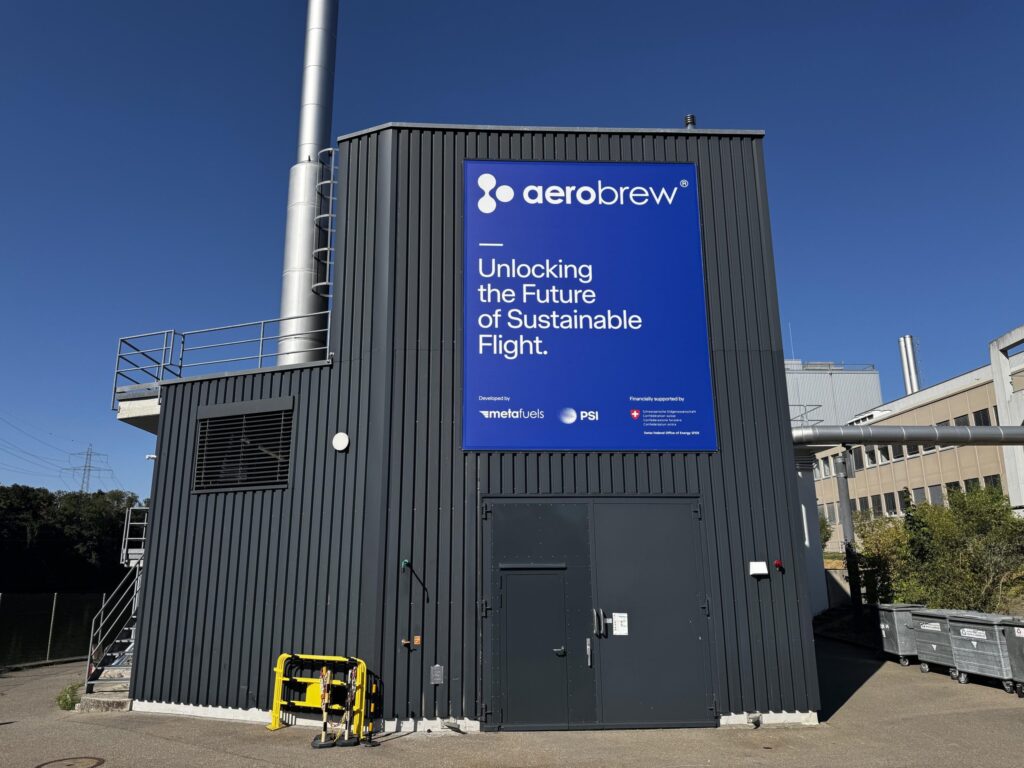
Methanol-to-jet fuel producer Metafuels says mandates are working. Source: Metafuels
In an interview with FlightGlobal in August, the chief executive of methanol-to-jet fuel producer Metafuels, Saurabh Kapoor, said that the development of eSAFs would “probably not” happen if it were not for mandates.
Meanwhile, Paddy Lowe, founder and chief executive of UK-based Zero Petroleum, told FlightGlobal in September – in response to concerns from airlines that there will not be enough eSAF to meet sub-mandates – that “we needed to start yesterday and the gap is capital, not technology”.
On the EU side, it does not look as though the Commission plans to alter the trajectory of its SAF mandates. Speaking at IATA’s World Sustainability Symposium in October, Eddy Liegeois, head of the aviation policy unit at the directorate-general for mobility and transport (DG MOVE), said “the target for SAF, and particularly for eSAF, must stay”.
Liegeois added that the Commission had been “very clear we will not modify the level of ambitions for decarbonising aviation”.
The post IAG calls for delay to SAF sub-mandates, fearing multi-billion dollar fines first appeared on FlightGlobal.