
Our approach to EU text provenance rules
How OpenAI is approaching text watermarking under EU rules. Learn where watermarks apply, how detection works, and why access starts with researchers.

Date of interview: Oct 2026Now Joe Rogan had an interview with UFO gov whistleblower David Grusch and things really got interesting as he revealed some…
Read More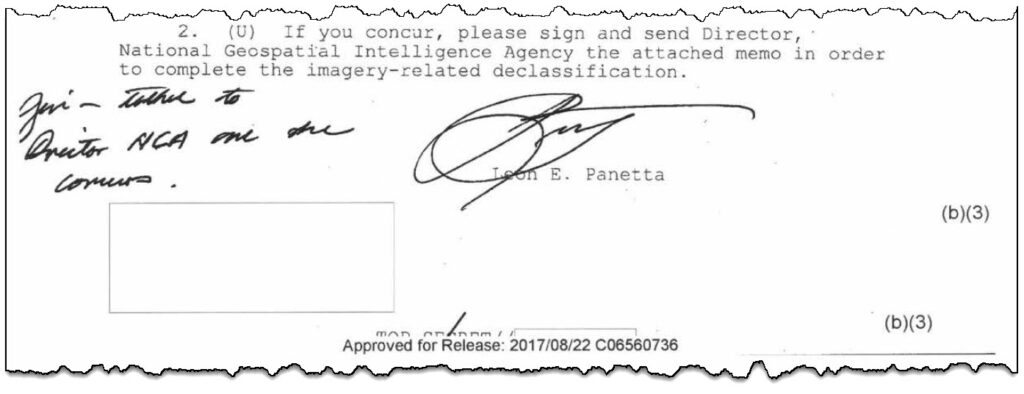
A newly obtained Central Intelligence Agency release provides a detailed look at the material prepared inside the U.S. government for the public rollout following the…
Read More
The 1980 presidential campaign between Democratic President Jimmy Carter and Republican challenger Ronald Reagan became the subject of a political controversy after it was revealed…
Read MoreHow OpenAI is approaching text watermarking under EU rules. Learn where watermarks apply, how detection works, and why access starts with researchers.
Model routing can finally be a design choice rather than a system enhancement The post How to Build a Cheap, Yet Reliable Model Router With Jev appeared first on Towards Data Science.
arXiv:2610.02330v1 Announce Type: new Abstract: Large language models (LLMs) rely on long-horizon tool invocation sequences for complex tasks, where each invocation can alter the task state and condition subsequent decisions. In long-horizon tool use, final-outcome rewards provide weak credit assignment over long interaction traces. Step-level rewards can offer more targeted feedback, but obtaining reliable step…
arXiv:2610.02300v1 Announce Type: new Abstract: Training-free safeguards for text-to-image generation often rely on a reusable safety signal, such as an unsafe direction or global toxic subspace, applied broadly across prompts. We provide a controlled geometric analysis of this global-unsafety assumption and reveal a consistent coverage-selectivity trade-off: compact unsafe subspaces fail to cover heterogeneous unsafe semantics,…
arXiv:2610.02281v1 Announce Type: new Abstract: Societal resilience research relies on access to useful and actionable data, which motivates our main research question: Can annual reports, processed at scale with LLMs, provide a useful signal about how companies disclose their response to AI? We test this by applying a reproducible two-stage classification pipeline to 9,821 annual…
In 2026, the question for enterprise AI is no longer whether predictive models can outperform statistical forecasts—that argument is settled. The big question now is how to enable predictive systems to act on their own conclusions without drifting from business intent. The frontier has moved from prediction to autonomous decision making, and the gap between…
For all the data that AI systems continually amass and analyze, enterprise AI agents often suffer from a curious shortcoming: a lack of knowledge. More than data, knowledge is the understanding of what the data means in the context of individual organizations. AI agents need this understanding to reason about situations, make decisions, and ultimately…
Over the summer I talked to the CEO of Springboards, a startup building an LLM that’s designed to come up with a wider variety of responses than its mainstream rivals do. At the start of the call, he said something that’s been stuck in my head since: “We often say that we’re a self-loathing AI…
This is today’s edition of The Download, our weekday newsletter that provides a daily dose of what’s going on in the world of technology. People really hate AI, so why can’t they get enough? —Will Douglas Heaven Over the summer I talked to the CEO of Springboards, a startup building an LLM designed to come…

Yossi Matias, Vice President & Head of Google Research, explores how AI is beginning to reshape biology, infrastructure, manufacturing, and science, and why its greatest impact may come when it intersects with other fields. Step inside the newsroom with our MIT Technology Review editors for sharp analysis and unpublished insights from the team that researches…