
Workspace agents
Learn how to build, use, and scale workspace agents in ChatGPT to automate repeatable workflows, connect tools, and streamline team operations.

Pat Price drew a crane. In the story Russell Targ would return to throughout his life, this was a particularly awkward object to explain: a…
Read More
The father had already been home once that morning. He had gone back to collect a tool from the garage of the family’s Kailua house…
Read More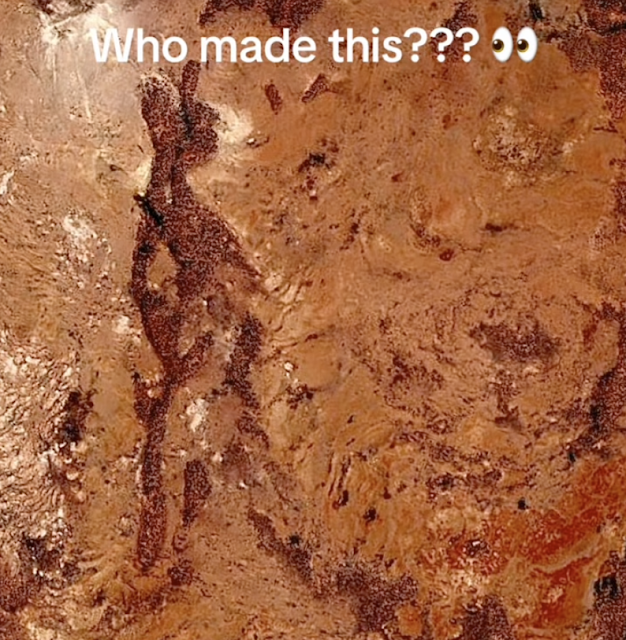
Date of discovery: Nov 25, 2026Location of discovery: South AustraliaSource: Google Earth MapI was using Google map and found this unique outline of a 2km…
Read MoreLearn how to build, use, and scale workspace agents in ChatGPT to automate repeatable workflows, connect tools, and streamline team operations.
Workspace agents in ChatGPT are Codex-powered agents that automate complex workflows, run in the cloud, and help teams scale work across tools securely.
OpenAI makes ChatGPT for Clinicians free for verified U.S. physicians, nurse practitioners, and pharmacists, supporting clinical care, documentation, and research.
arXiv:2604.18838v1 Announce Type: new Abstract: This research investigates the performance and efficacy of machine learning models in stock prediction, comparing Artificial Neural Networks (ANNs), Quantum Qubit-based Neural Networks (QQBNs), and Quantum Qutrit-based Neural Networks (QQTNs). By outlining methodologies, architectures, and training procedures, the study highlights significant differences in training times and performance metrics across models.…
arXiv:2604.18805v1 Announce Type: new Abstract: Large language model (LLM)-based systems are increasingly deployed to conduct scientific research autonomously, yet whether their reasoning adheres to the epistemic norms that make scientific inquiry self-correcting is poorly understood. Here, we evaluate LLM-based scientific agents across eight domains, spanning workflow execution to hypothesis-driven inquiry, through more than 25,000 agent…
arXiv:2604.18789v1 Announce Type: new Abstract: Reinforcement Learning from Human Feedback (RLHF) is central to aligning Large Language Models (LLMs), yet it introduces a critical vulnerability: an imperfect Reward Model (RM) can become a single point of failure when it fails to penalize unsafe behaviors. While existing red-teaming approaches primarily target policy-level weaknesses, they overlook what…
arXiv:2604.18724v1 Announce Type: new Abstract: Users typically interact with and evaluate language models via single outputs, but each output is just one sample from a broad distribution of possible completions. This interaction hides distributional structure such as modes, uncommon edge cases, and sensitivity to small prompt changes, leading users to over-generalize from anecdotes when iterating…
arXiv:2604.18645v1 Announce Type: new Abstract: This paper addresses the Variable Gapped Longest Common Subsequence (VGLCS) problem, a generalization of the classical LCS problem involving flexible gap constraints between consecutive solutions' characters. The problem arises in molecular sequence comparison, where structural distance constraints between residues must be respected, and in time-series analysis where events are required…
This is today’s edition of The Download, our weekday newsletter that provides a daily dose of what’s going on in the world of technology. Introducing: 10 Things That Matter in AI Right Now What actually matters in AI right now? It’s getting harder to tell amid the constant launches, hype, and warnings. To cut through…
Isegye Idol If you thought K-pop was weird, virtual idols—humans who perform as anime-style digital characters via motion capture—will blow your mind. My favorite is a girl group called Isegye Idol, created by Woowakgood, a Korean VTuber (a streamer who likewise performs as a digital persona). Isegye Idol’s six members are anonymous, which seems to…