

Wednesday, November 25, 2026

The Download: faking blood and the future of batteries

This is today’s edition of The Download, our weekday newsletter that provides a daily dose of what’s going on in the world of technology. The US military’s race to make fake blood In February 2007, a US military helicopter carrying blood to a field hospital was shot down in Iraq, killing all seven crew members.…
The US military’s race to make fake blood
AI

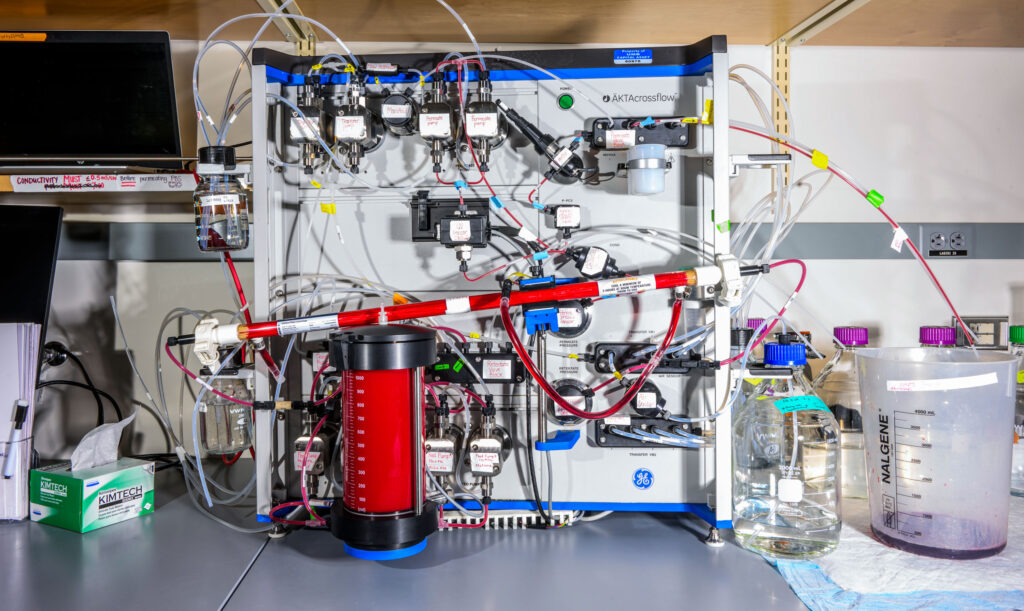
The US military’s race to make fake blood

Its call sign was Morphine 1-2.   In February 2007, the hulking dual-­rotor casualty evacuation helicopter had just flown three wounded soldiers to a field hospital in Balad, north of Baghdad, when another call came: an emergency mission to fly through an insurgent-controlled area in broad daylight. Typically, helicopters would be in a spot like…

Open models have real benefits. Do they outweigh the risks?

MIT Technology Review Explains: Let our writers untangle the complex, messy world of science and technology to help you understand what’s coming next. You can read more from the series here. Late last month, Anthropic released a report arguing that the model GLM-5.3 poses a major cyberattack risk. The report’s core concern is that the…

Mars may be a hellhole, but the moon is not far behind

Welcome to the second space race. You can be forgiven for experiencing déjà vu. Last time, it was the Soviet Union and the United States vying to be the first to plant some flags. Now it’s a sprint to the lunar surface between America and China—alongside a host of varyingly friendly and rival nations—plus a…

We’re putting too much faith in AI’s ability to say no

Ever since people first seriously contemplated giving machines an intelligence modeled on our own, there has never been any question that they would, like us, be able to say no. The sci-fi canon is full of stories of robotic disobedience. Most of these capers are, of course, cautionary.  But recently, the idea that AI shouldn’t…