How to Build Effective Evals for AI Agents
Learn how to build effective evals for AI agents, from designing clear tasks and choosing the right graders to building reliable eval harnesses and tracking changes over time.

Date of interview: Oct 2026Now Joe Rogan had an interview with UFO gov whistleblower David Grusch and things really got interesting as he revealed some…
Read More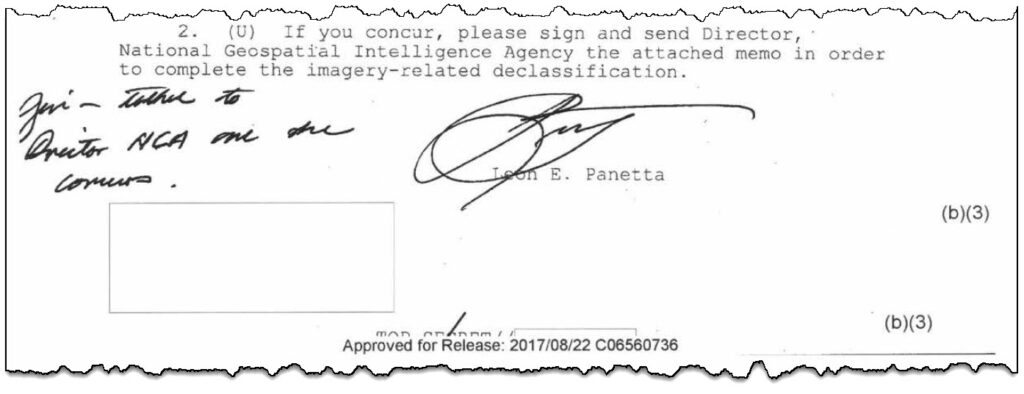
A newly obtained Central Intelligence Agency release provides a detailed look at the material prepared inside the U.S. government for the public rollout following the…
Read More
The 1980 presidential campaign between Democratic President Jimmy Carter and Republican challenger Ronald Reagan became the subject of a political controversy after it was revealed…
Read MoreLearn how to build effective evals for AI agents, from designing clear tasks and choosing the right graders to building reliable eval harnesses and tracking changes over time.
Scikit-LLM wraps language models in the scikit-learn estimator API, so it drops into a Pipeline or a cross-validation loop natively.
Explore five free hands-on workshops covering data engineering, machine learning, MLOps, LLMs, AI agents, and AI development through practical lessons, homework, projects, and community-based learning.
Explore how JONI approaches AI agent orchestration with persistent runtimes, multi-model routing, execution capabilities, and reliability beyond simple content generation.
Explore five free Microsoft GitHub courses covering data science, machine learning, artificial intelligence, generative AI, LLMs, RAG, fine-tuning, and AI agents.
Opal is Google Labs' no-code tool for turning natural language into working AI mini-apps, built on top of an internal framework called Breadboard. Here's how I learned to use it best.
Senior Python practice, watched up close, is mostly surprise reduction. These seven habits surface the surprises before production does.
DeepSeek-V4.1-Flash shows how Causal Encoder-Decoder architecture, MoE, KV cache compression, CSA2, cheaper prefill, and efficient decoding can make powerful open-source AI models far more efficient to run.
This article explains 5 Python techniques for efficient resource orchestration and sticks to what's stable today, 3.11 and later for the core techniques, with one 3.14-specific tool called out explicitly as requiring that version
Learn how to refactor messy Python code into clean, maintainable functions.