

Wednesday, November 25, 2026
Maya Site Discovered on Mexico’s Yucatán Peninsula
Ancient Engineering

Maya Site Discovered on Mexico’s Yucatán Peninsula

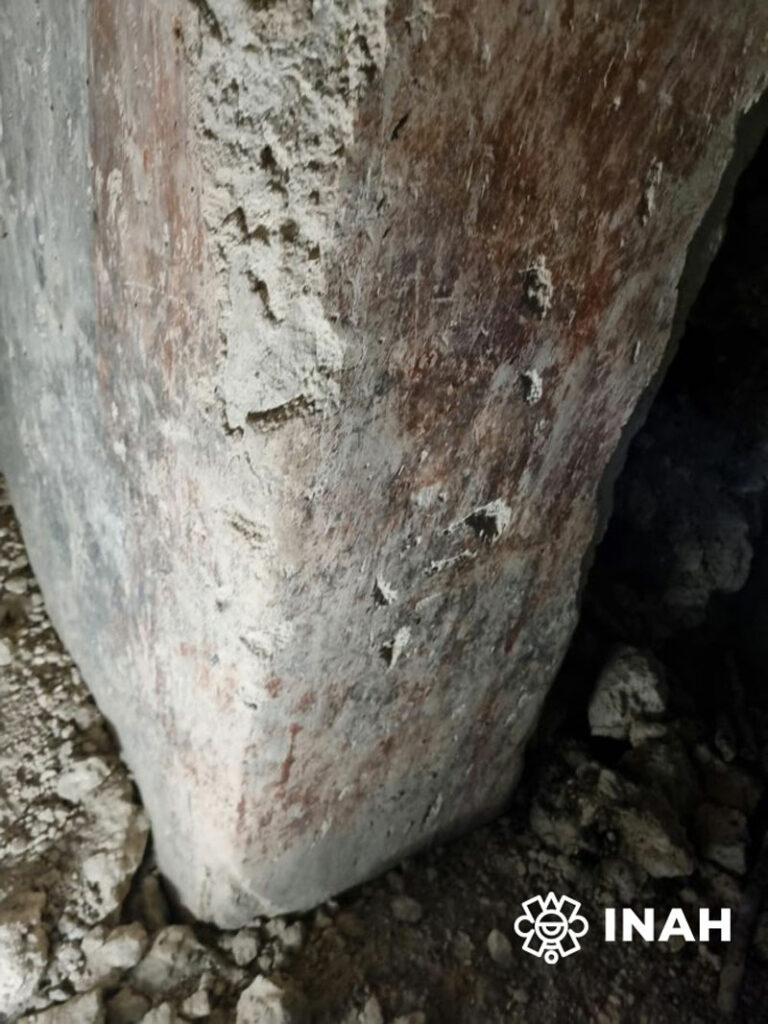
Mural painting at the site of El Jefeciño, Quintana Roo, Mexico QUINTANA ROO, MEXICO—Riviera Maya News reports that an archaeological site dubbed El Jefeciño was discovered on the Yucatán Peninsula by researchers from Mexico’s National Institute of Anthropology and History during an investigation along the route of the Maya Train Project. Some 80 buildings have…

Scientists think they finally know why Neanderthals vanished

A new study suggests Neanderthals didn’t go extinct simply because of climate change or competition with Homo sapiens. Instead, the key difference may have been social connectivity—Homo sapiens formed stronger, more flexible networks that helped them survive environmental shocks. Neanderthals had connections too, but they were more fragile and regionally limited. This made them less…

Sanskrit Seal Refers to Sacred Shiva Text
Ancient Engineering

Sanskrit Seal Refers to Sacred Shiva Text

Sanskrit seal HYDERABAD, INDIA—The Times of India reports that researchers led by epigrapher K. Muniratnam Reddy from the Archaeological Survey of India (ASI) have decoded a Sanskrit inscription written in Brahmi characters on a seal discovered in what is now Pakistan. The translation reads, “Devadaruvane Svami Kotesvarah,” indicating that the fifth-century a.d. seal belonged to…

Remains of Byzantine Plague Victims Studied

TAMPA, FLORIDA—According to a statement released by the University of South Florida, a mass grave containing the remains of victims of the Plague of Justinian (A.D. 541–750) has been identified at the site of Jerash in northern Jordan by a team of researchers led by Rays H.Y. Jiang of the University of South Florida. Hundreds…

Parasites Detected in Roman-Era Chamber Pots from Bulgaria

WARSAW, POLAND—Researchers led by Elena Klenina and Andrzej B. Biernacki of Adam Mickiewicz University and their colleagues identified intestinal parasites in residues taken from four chamber pots recovered from two archaeological sites in the Roman province of Moesia Inferior, which is located in what is now Bulgaria, according to a La Brújula Verde report. Three…

Pollen Trapped in Pitch Tracks Repairs Made to Ancient Ship

STRASBOURG, FRANCE—According to a statement released by Frontiers, the protective coatings on a 2,200-year-old Roman shipwreck found off the coast of Croatia were made of pine tar, or pitch, and a mixture of pine tar and beeswax. Beeswax was added to heated tar to make a mixture known to Greek shipbuilders as zopissa, which is…

Giant octopuses may have ruled the oceans 100 million years ago

Giant, fearsome octopuses may have once ruled the ancient seas, according to new research that flips the script on their evolutionary past. By uncovering exquisitely preserved fossil jaws hidden inside rock, scientists revealed that early octopuses from the age of dinosaurs weren’t shy, soft-bodied drifters—they were massive apex predators, possibly stretching up to 20 meters…